



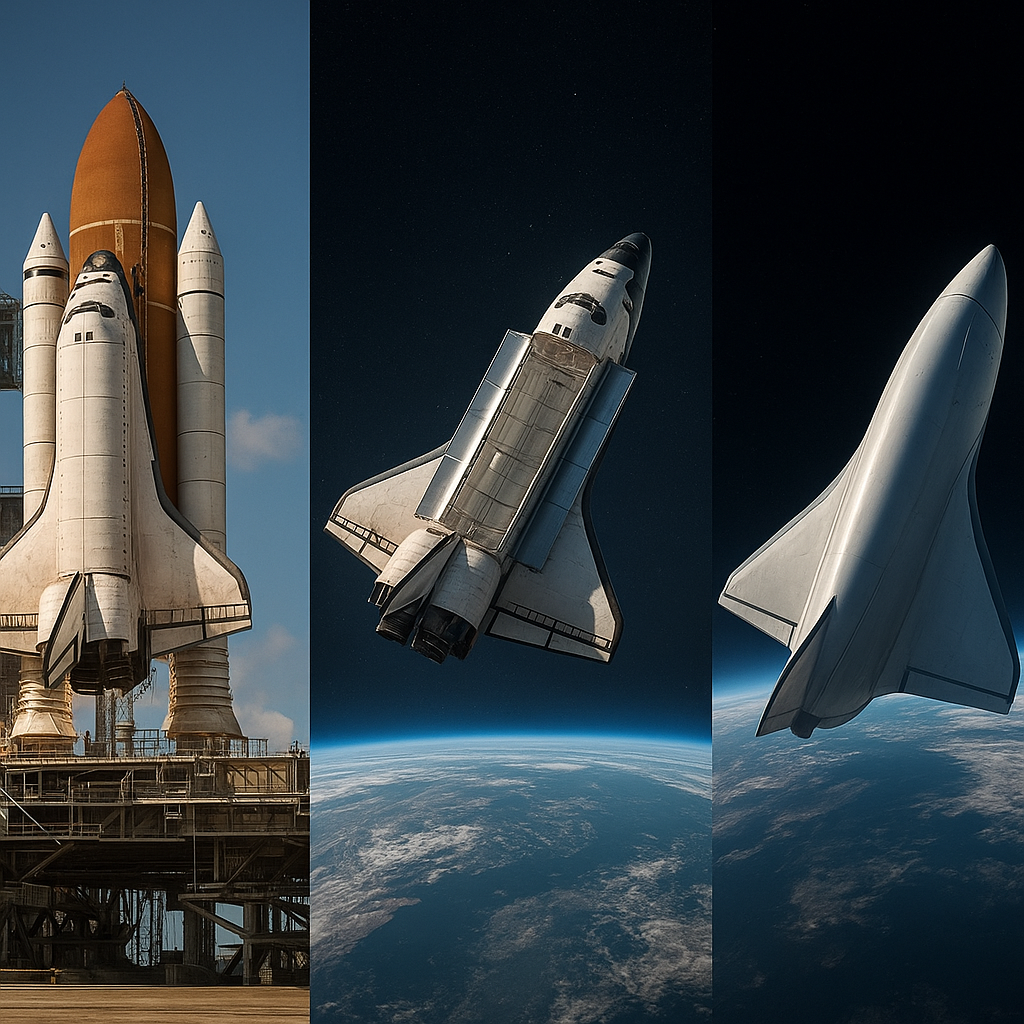
The evolution of space shuttles marks a pivotal era in humanity’s quest to explore the cosmos. From the first conceptual sketches of reusable spacecraft to the advanced designs that might one day ferry humans to Mars, the journey has been characterized by ingenuity, setbacks, and triumphs. This article delves into four distinct phases of this extraordinary saga, examining how each milestone has shaped our vision for a future among the stars.
Early Visions and Technological Foundations
Long before the first operational shuttle took flight, engineers and visionaries laid the groundwork for a truly reusable spacecraft. In the 1950s and 1960s, rocketry pioneers such as Wernher von Braun explored concepts for winged vehicles that could launch into space and return to Earth like airplanes. These preliminary studies focused on key elements:
- Thermal protection systems to withstand reentry temperatures exceeding 1,500°C.
- Innovative propulsion architectures combining solid and liquid fuels for reliability.
- Lightweight structures built from advanced aluminum and early composite materials.
During this era, NASA’s Space Task Group evaluated multiple designs, eventually selecting a delta-wing concept that balanced aerodynamic stability with payload capacity. Research into heat-resistant tiles, flexible fuel tank seals, and flight control software became critical priorities. Though none of the early prototypes reached full operational status, they laid the technical foundation for the next phase.
Operational Era: The Space Shuttle Program
In 1981, the first space shuttle orbiter soared skyward, heralding a new age in orbital transportation. The Space Shuttle program would operate for three decades, completing 135 missions and demonstrating remarkable versatility. Key achievements included:
- Deploying satellites like the Hubble Space Telescope, which revolutionized astronomy.
- Constructing and servicing the International Space Station (ISS), cementing global cooperation.
- Advancing scientific experiments in microgravity, producing breakthroughs in materials science and biotechnology.
Astronauts adapted to the shuttle’s unique runway landings, while ground crews perfected the art of tile maintenance. The orbiter’s twin solid rocket boosters and external fuel tank showcased integrated systems engineering at its finest. Despite its success, the shuttle faced two tragic accidents—Challenger in 1986 and Columbia in 2003—that underscored the unforgiving realities of spaceflight and prompted sweeping safety overhauls.
Lessons Learned and Program Challenges
The operational shuttle era offered invaluable lessons about risk management, innovation, and long-term sustainability. Engineers and mission planners grappled with factors such as:
- The tradeoff between shuttle reusability and the extensive refurbishment each mission required.
- Cost overruns fueled by complex maintenance of thermal tiles and booster segments.
- Balancing scientific objectives with crew safety and hardware reliability.
Post-Columbia investigations highlighted the critical need for improved foam insulation processes and in-flight inspection techniques. They also prompted a shift in NASA’s culture toward more robust communication pathways between flight controllers, engineers, and management. Ultimately, the Space Shuttle program demonstrated both the promise and pitfalls of a partially reusable vehicle, informing the design strategies of emerging aerospace companies.
Toward a New Generation of Space Transporters
The 21st century has seen a resurgence of interest in spacecraft that can launch, return, and relaunch with minimal turnaround time. Private enterprises and national agencies alike are developing vehicles inspired by shuttle heritage but optimized for cost-efficiency and safety. Notable efforts include:
- SpaceX’s fleet of Falcon rockets and the Starship system, aiming for full reusability.
- Blue Origin’s New Shepard and New Glenn programs focusing on vertical landings.
- NASA’s collaboration on the Orion spacecraft and the Lunar Gateway, targeting sustainable lunar exploration.
These projects integrate advanced materials such as carbon-fiber composites, deploy next-generation engines running on methane, and exploit autonomous landing algorithms. Furthermore, international partnerships are expanding the shuttle concept beyond low Earth orbit, envisioning orbital transfer vehicles that support crewed missions to Mars and beyond.
As humanity prepares for its next giant leap, the shuttle’s legacy endures in every reusable booster stage, every ceramic heat shield, and every astronaut trained to pilot winged spacecraft. The lessons etched into the annals of shuttle history continue to guide engineers and explorers toward a future where access to space becomes routine, safe, and economically viable. In this unfolding chapter of cosmic exploration, the shuttle spirit lives on in every rocket that rises above the horizon.