


The universe is bathed in a constant flux of high-energy particles and electromagnetic radiation that pose significant challenges to space exploration. While the allure of distant planets and the promise of uncovering cosmic secrets drive humanity’s ambitions, the environment beyond Earth’s protective atmosphere is fraught with invisible threats. This article delves into the hidden dangers of space radiation, exploring its origins, the risks it poses to astronauts and spacecraft, and the emerging strategies to mitigate its impact.
Origins and Nature of Space Radiation
Space radiation encompasses a variety of energetic particles and high-frequency photons. Unlike the familiar dangers of ultraviolet rays on Earth, space radiation arises from sources far beyond our planet. Understanding these sources is essential to appreciate the scale of the threat.
Galactic Cosmic Rays
Galactic cosmic rays (GCRs) are charged particles—primarily protons, alpha particles, and heavier nuclei—that originate from supernovae and other cataclysmic events in the Milky Way. Traveling at velocities approaching the speed of light, GCRs carry immense energy and can penetrate deep into materials.
Solar Particle Events
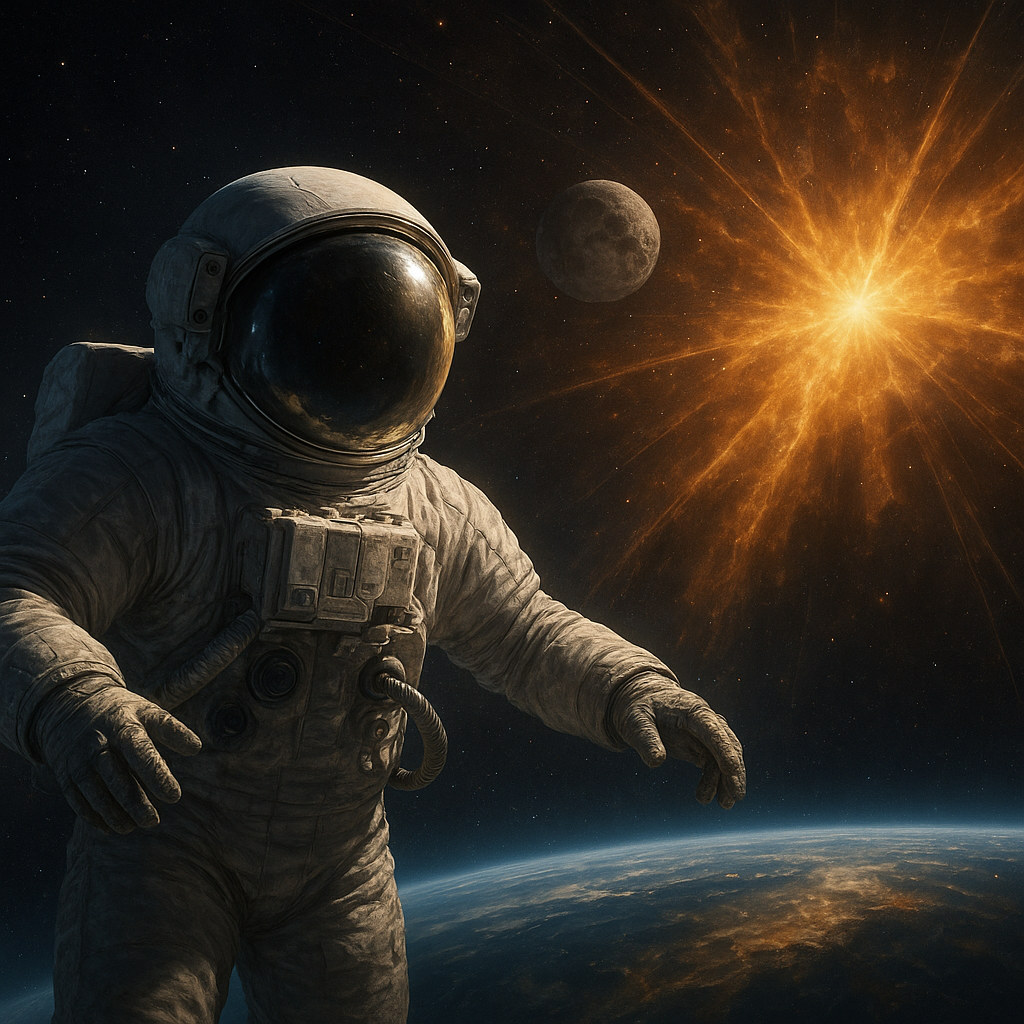
Solar flares and coronal mass ejections (CMEs) erupt from the Sun’s magnetic activity, hurling streams of protons and heavier ions into space. During intense solar storms, radiation levels can spike dramatically, overwhelming standard protective measures and endangering crewed missions.
Trapped Radiation Belts
Encircling Earth are the Van Allen radiation belts—zones of charged particles captured by our planet’s magnetic field. While these belts offer some protection by diverting particles, spacecraft traversing low Earth orbit (LEO) and beyond still face exposure to energetic particles that can accumulate over time.
Risks to Astronauts and Equipment
Shielded by Earth’s atmosphere and magnetosphere, life on the surface is largely safe from cosmic radiation. In contrast, spacefarers and interplanetary probes encounter a relentless barrage of high-energy particles that can impair biological functions and degrade materials.
Biological Effects on Astronauts
Exposure to space radiation poses acute and chronic health risks. High doses can trigger radiation sickness, characterized by nausea, fatigue, and immune system suppression. Over the long term, cumulative exposure increases the likelihood of carcinogenesis, cardiovascular disease, and degenerative conditions in the central nervous system.
- DNA damage: Ionizing particles can break chemical bonds within cellular DNA, leading to mutations and chromosomal aberrations.
- Carcinogenic risks: Even low-dose exposure elevates the probability of cancer development, particularly in tissues with rapidly dividing cells.
- Neurodegeneration: Emerging research links chronic low-level radiation to cognitive decline and neuroinflammatory responses.
Impact on Spacecraft and Equipment
Electronic systems are vulnerable to single-event upsets (SEUs), where a single charged particle can flip a transistor’s state or corrupt memory. Over time, cumulative radiation exposure degrades semiconductors and optical sensors, compromising mission integrity.
- Solar panel degradation: High-energy particles erode photovoltaic materials, reducing power output.
- Material embrittlement: Polymers and composite structures become brittle as radiation alters their molecular bonds.
- Sensor noise: Detectors and cameras suffer from increased background noise, impairing data quality.
Mitigation Strategies and Future Research
Protecting human explorers and robotic assets against space radiation demands a multi-layered approach. Advances in technology, materials science, and biomedical research are converging to reduce risk and enable prolonged missions.
Physical Shielding
Traditional shielding relies on layers of aluminum or polyethylene to absorb or scatter incoming particles. However, effective protection against GCRs would require impractically thick barriers. Innovative solutions include:
- Hydrogen-rich materials: Polymers and gels high in hydrogen content offer superior attenuation of charged particles.
- Active shielding: Electromagnetic fields generated around a spacecraft could deflect charged particles, mimicking Earth’s magnetosphere on a smaller scale.
- Regolith-based shielding: For surface habitats on the Moon or Mars, covering structures with local soil may provide cost-effective protection.
Pharmacological Countermeasures
Researchers are investigating drugs and dietary supplements that can bolster cellular defenses against radiation-induced oxidative stress and DNA damage. Proposed interventions include:
- Antioxidant therapies: Agents like vitamins E and C aim to neutralize free radicals generated by ionizing radiation.
- Radioprotectors: Compounds such as amifostine have shown potential to reduce tissue damage when administered before exposure.
- DNA repair enhancers: Investigational molecules may accelerate cellular repair pathways to mitigate mutation rates.
Dosimetry and Monitoring
Accurate measurement of radiation exposure is critical for mission planning and crew safety. Modern dosimetry devices integrate solid-state detectors and tissue-equivalent sensors to provide real-time data, enabling adaptive countermeasures during solar events.
Modeling and Forecasting
Celestial weather forecasting aims to predict solar storms and galactic cosmic ray intensities. By combining satellite observations with magnetohydrodynamic models, space agencies can issue early warnings and adjust mission timelines to minimize exposure during peak radiation periods.
Challenges for Long-Duration Missions
The aspiration to send humans to Mars and beyond demands solutions that balance mass, power, and safety. Key challenges include sustaining acceptable exposure limits over multi-year journeys and designing habitats that integrate radiation mitigation without prohibitive weight penalties.
Habitat Design Considerations
Radiation shelters within spacecraft or surface bases could provide temporary refuge during solar particle events. These safe zones might incorporate enhanced shielding and life-support redundancies to protect crew members during high-risk intervals.
Interplanetary Transit
During transit, spacecraft trajectories could be optimized to take advantage of natural magnetic anomalies or solar shadowing. Timing departures to coincide with solar minimum periods reduces cumulative GCR exposure but increases vulnerability to unpredictable solar events.
Surface Missions on Mars and the Moon
On planetary surfaces, regolith-based structures or subterranean lava tubes might offer substantial protection. Deploying 3D printing techniques using local materials could facilitate the construction of low-mass habitat walls capable of attenuating radiation.
Future Directions and Research Frontiers
Pioneering experiments aboard the International Space Station and deep-space probes continue to refine our understanding of space radiation biology and physics. Upcoming missions plan to carry advanced radiation detectors and bio-exposure modules to characterize effects in situ.
Biological Studies in Deep Space
Experiments on microorganisms, plants, and small animals aim to reveal the influence of chronic radiation on life processes. These studies will inform the development of genetic or pharmacological interventions to enhance human resilience.
International Collaboration
Global partnerships among space agencies, universities, and private companies foster the exchange of radiation data and mitigation technologies. Shared infrastructure, such as surface testbeds on the Moon, will accelerate validation of protective measures.
Engineering Innovations
Future spacecraft designs may incorporate modular shielding panels, electromagnetic deflection coils, and autonomous monitoring systems. Combined with adaptive mission planning, these innovations will pave the way for safer interplanetary travel.
Conclusion of Insights
Space radiation remains one of the most formidable obstacles to sustained human exploration beyond low Earth orbit. By unraveling the complex interactions between high-energy particles and biological systems, and by developing integrated shielding, pharmacological, and operational strategies, humanity inches closer to realizing its cosmic ambitions. The journey is fraught with invisible peril, but scientific ingenuity and international cooperation hold the promise of turning the void from a foe into a frontier.