




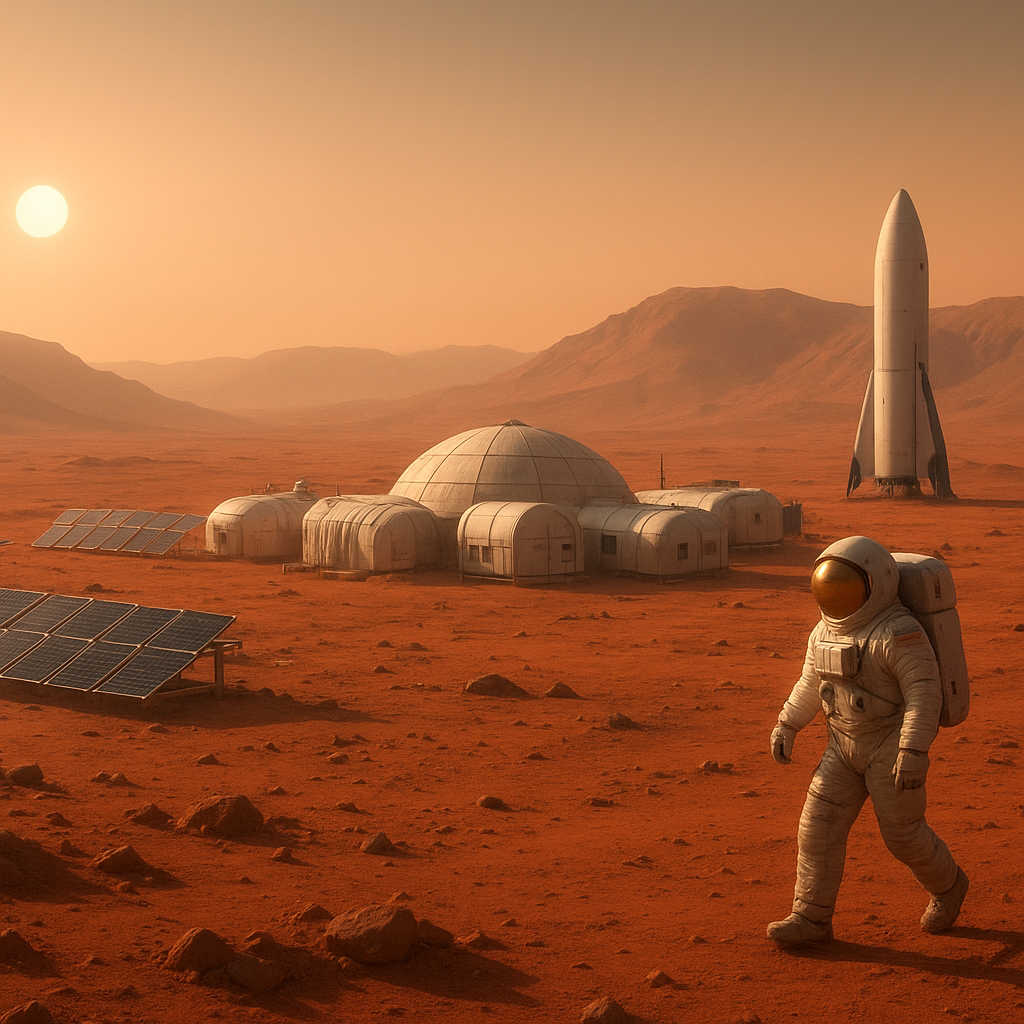
The Future of Human Colonization on Mars explores the multifaceted journey from Earth-bound ambition to a thriving off-world society. With each scientific breakthrough and engineering triumph, humanity draws closer to becoming a multi-planetary species. The challenges of hostile environments, the promise of untapped resources, and the ethical considerations of altering another world all intertwine to shape the narrative of our red neighbor’s transformation. This article delves into the key aspects of making Mars a second home, highlighting the innovations, strategies, and dilemmas that lie ahead.
Environmental Challenges and Innovative Solutions
Turning Mars into a habitable environment demands overcoming several formidable obstacles. The planet’s thin atmosphere, extreme temperatures, and high levels of cosmic radiation require creative strategies to protect settlers and infrastructure. Scientists and engineers are investigating multiple avenues to confront these issues head-on.
Atmospheric Pressure and Temperature Regulation
- Current atmospheric pressure on Mars is less than 1% of Earth’s, making it impossible to breathe without pressurized suits or habitats.
- Proposed solutions include erecting inflatable or rigid habitats that maintain Earth-like pressure, or building underground living quarters to buffer temperature swings and reduce exposure to solar flares.
- Advanced materials such as graphene-based composites and aerogel insulation could stabilize internal temperatures, ensuring comfortable living conditions.
Radiation Shielding Strategies
- The absence of a protective magnetic field on Mars means colonists face chronic exposure to cosmic rays and solar particle events.
- Techniques under development involve layering habitats with water, polyethylene, or regolith—Martian soil—to create natural radiation shields.
- Innovative regolith-derived bricks produced via 3D printing could serve a dual role: construction material and protective barrier.
Resource Extraction and Utilization
In-situ Resource Utilization (ISRU) will be a cornerstone of any sustainable colony. Extracting water from icy poles or hydrated minerals and converting local CO₂ into oxygen and fuel are critical steps toward autonomy. Projects such as MOXIE (Mars Oxygen ISRU Experiment) demonstrate how Martian atmosphere can be harnessed to produce breathable air.
Technological Innovations and Infrastructure Development
To establish a permanent foothold on Mars, advanced technology must converge with robust infrastructure. From transportation networks to energy generation, each component plays a vital role in creating a self-sufficient outpost.
Transit Vessels and Entry, Descent, and Landing (EDL) Systems
- Next-generation spacecraft will require advanced heat shields, supersonic retro-propulsion, and precision navigation to reduce landing risks.
- Reusable rockets and interplanetary transfer vehicles aim to lower costs and increase flight frequency between Earth and Mars.
- Potential development of space elevators or tethers may revolutionize cargo delivery by mitigating reliance on rocket fuel alone.
Power Generation and Distribution
Reliable energy is the lifeblood of any colony. Solar power arrays, nuclear reactors, and radioisotope thermoelectric generators (RTGs) are the leading candidates for Martian stations. Optimally, a hybrid system combining solar farms with compact nuclear units will ensure round-the-clock electricity, powering life support, manufacturing plants, and research laboratories.
Construction Techniques and 3D Printing
Robotic and autonomous systems will pave the way for building essential facilities before humans arrive. 3D printing using local regolith promises to create habitats, landing pads, and roadways. These printers deposit successive layers of soil-derived concrete, minimizing the need to transport bulk materials from Earth.
Life Support, Agriculture, and Long-Term Sustainability
Beyond initial survival, the goal is to achieve true sustainability. This encompasses closed-loop life support systems, regenerative agriculture, and waste recycling. Balancing resource consumption with renewable processes is crucial for a thriving community.
Closed-Loop Life Support Systems
- Advanced bioregenerative systems recycle air, water, and waste. Algae and plant-based modules can convert CO₂ back into oxygen while providing fresh food.
- Microbial bioreactors process organic waste, producing nutrients and fertilizer for hydroponic farms.
- Water recycling technology with multi-stage filtration and distillation ensures minimal loss of this precious commodity.
Martian Agriculture and Food Production
Cultivating crops in Martian soil faces hurdles such as high salt content and low nutrient levels. Hydroponics and aeroponics circumvent these issues by providing nutrient-rich solutions directly to roots. Genetically modified plants designed to tolerate Martian stresses could further boost yields.
Energy-Efficient Habitat Design
Integration of passive solar heating, thermal inertial walls, and reflective surfaces can reduce energy consumption. Smart habitat control systems will optimize internal climates, adjusting lighting and climate parameters to maintain comfort while conserving power.
Social, Ethical, and Governance Considerations
Establishing a Martian colony is not merely a technical endeavor; it entails forging a new society. Questions of law, culture, and ethics will define the character of off-world communities. Addressing these issues early will prevent discord and ensure equitable progress.
Legal Framework and Property Rights
Under the Outer Space Treaty, no nation can claim sovereignty over celestial bodies. However, as private enterprises lead the charge, frameworks for resource rights and commercial activities must be developed. International collaboration and transparent regulations will help avoid conflicts and encourage investment.
Social Dynamics and Psychological Well-Being
Isolation, confinement, and distance from Earth pose significant psychological stresses. Colony planners must incorporate communal spaces, virtual reality leisure areas, and mental health support networks. Building a shared culture—through art, sports, and traditions—will foster a sense of belonging.
Ethical Implications of Terraforming and Alteration
- Efforts to terraform Mars raise profound ethical questions: do humans have the right to change an entire planet’s ecosystem?
- Balancing scientific curiosity with planetary protection protocols is essential to avoid unintended ecological damage.
- Engaging global stakeholders in discussions about Mars’ future ensures that colonization proceeds responsibly and ethically.
Conclusion of Ongoing Exploration
As preparations for the first human mission to Mars gain momentum, each breakthrough highlights the interconnected nature of environmental, technical, and social challenges. Success hinges on sustainable innovation, careful planning, and inclusive governance. By leveraging advanced technologies, mastering resource extraction, and nurturing a resilient culture, humanity takes strides toward realizing the dream of becoming an interplanetary species. Mars awaits as a frontier of endless possibilities, where adaptation and human spirit converge to write a new chapter in cosmic exploration.