



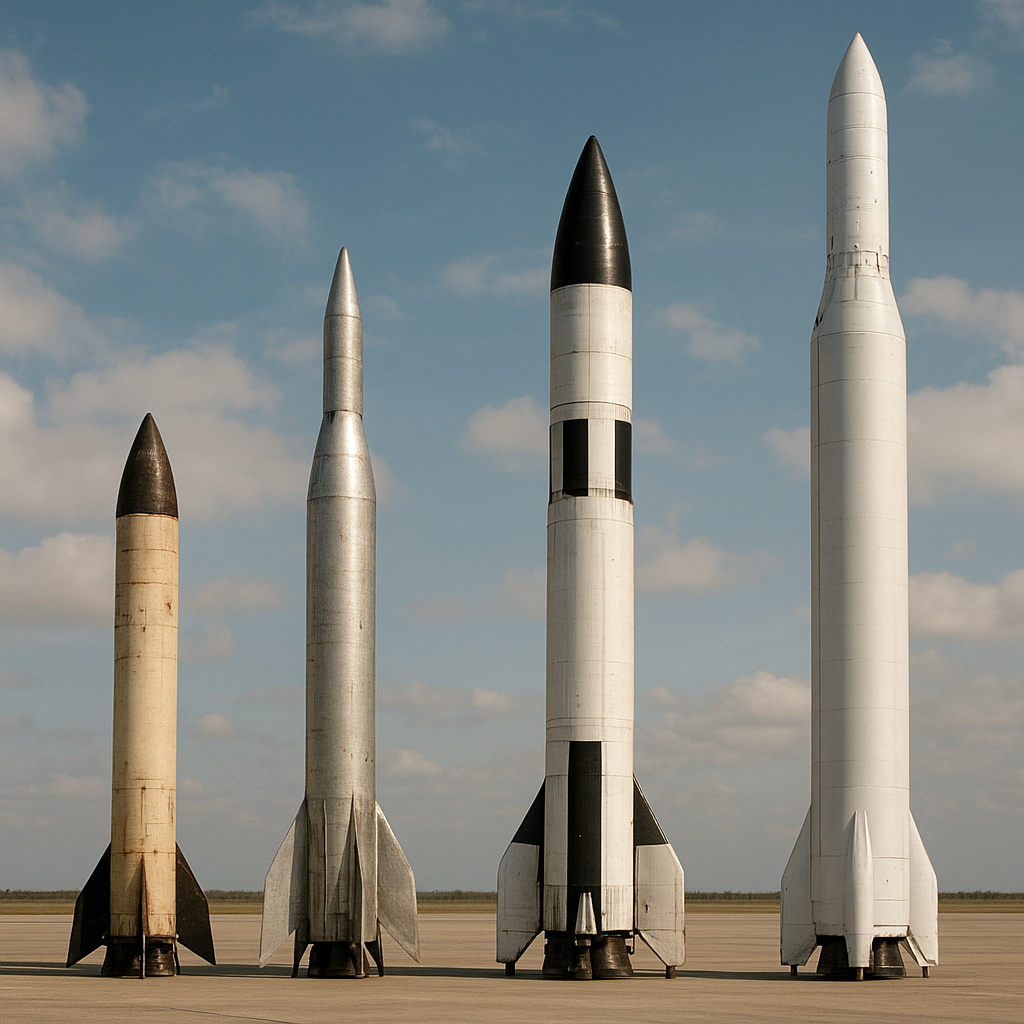
The Evolution of Rocket Design reveals an extraordinary journey from rudimentary gunpowder engines to highly sophisticated launch vehicles that propel humanity beyond Earth’s boundaries. Over centuries of experimentation, engineers and visionaries have continually refined the principles of propulsion, materials science, and guidance, laying the foundation for future missions that will define our place among the stars. This article explores the rich tapestry of rocketry’s past, its current breakthroughs, and the promising developments on the horizon.
Origins of Rocketry
The earliest documented rockets emerged in ancient China, where inventors harnessed the explosive force of black powder to create simple fire arrows. These devices offered rudimentary thrust and served primarily as battlefield novelties. It was not until the 20th century that scientific methods were applied to transform rocketry from an art into a rigorous engineering discipline. Visionaries like Konstantin Tsiolkovsky postulated mathematical frameworks for achieving orbital velocity, while Robert H. Goddard conducted the first successful liquid-fueled rocket launch in 1926, proving that controlled, high-performance flight through adjustable nozzles and pressurized tanks was possible.
- Early fire arrows powered by gunpowder mixtures
- Konstantin Tsiolkovsky’s theoretical models of multi-stage flight
- Robert H. Goddard’s experiments with liquid oxygen–kerosene engines
- World War II applications: Germany’s V-2 rocket, the first object to break the 100 km boundary
These pioneering efforts established fundamental principles of aerodynamics, staging, and combustion control. Engineers learned that the shape of the rocket body, nozzle expansion ratios, and center of mass positioning were critical for stability. They also discovered the limits of available propellants and the immense challenges of achieving sufficiently high pressures and temperatures inside a combustion chamber. Each successful launch yielded data that spurred further refinements in engine cycles and structural design.
Advancements in Modern Rocket Design
By the late 20th century, rockets evolved into dedicated vehicles for scientific research, satellite deployment, and human exploration. Innovations in materials—such as lightweight carbon composites and high-strength aluminum alloys—enabled stronger airframes under extreme thermal and mechanical loads. Computational fluid dynamics allowed engineers to optimize the external contours of rockets for reduced drag and improved flow separation, revolutionizing our understanding of aerodynamics.
Simultaneously, improvements in chemical propellants delivered higher specific impulse and energy density. Cryogenic fuels like liquid hydrogen and liquid oxygen provided unparalleled efficiency, though at the expense of complex insulation and refrigeration systems. Solid propellant boosters made a comeback for reliability and simplicity, proving invaluable for heavy-lift support stages. Modern vehicles often combine these approaches in multi-stage arrangements, balancing cost, reliability, and performance.
- High-thrust engines employing staged combustion cycles
- Grid fin control surfaces for precise reentry guidance
- Advanced turbopumps capable of 3,000+ RPM
- Cryogenic insulation techniques to minimize boil-off
Today’s reusable launchers demonstrate dramatic cost reductions and rapid turnaround times. SpaceX’s Falcon 9 successfully lands its first stage vertically, saving up to 80% of manufacturing expenses. Blue Origin’s New Shepard also exemplifies vertical recovery and refurbishment. These advances hinge on precise engine throttling, heat-resistant landing legs, and robust avionics for pinpoint touchdown—all integral to extending a vehicle’s operational lifespan.
Emerging Technologies and the Road Ahead
The quest for deeper space missions demands fresh breakthroughs in engine architecture, guidance systems, and structural innovation. Deep space missions to Mars and beyond will rely on propulsion methods that far exceed the capabilities of conventional chemical rockets. Electric propulsion—using ion or Hall-effect thrusters—offers high efficiency at the cost of low thrust, ideal for continuous acceleration over months or years. Nuclear thermal rockets promise to double specific impulse by heating propellant through a reactor core, though significant safety and political hurdles remain.
Additive Manufacturing in Rocket Production
3D printing has emerged as a game-changing technique for fabricating complex engine components in a single piece, reducing part count and potential failure points. Companies now produce entire combustion chambers, injector plates, and nozzle assemblies via metal powder bed fusion, streamlining supply chains and accelerating iterative design. This approach shortens development cycles from years to mere months and fosters rapid experimentation with novel geometries that were previously unmanufacturable.
Guidance, Navigation, and Control Innovations
Artificial intelligence and advanced sensors are transforming autonomous flight. Modern rockets can analyze live accelerometer and gyroscope data, dynamically adjusting thrust vectoring to compensate for winds, gusts, and off-nominal combustion events. Optical star trackers and LIDAR-based terrain mapping enable precision landings on unprepared surfaces, laying the groundwork for lunar or Martian outposts. These technologies converge to enhance both safety and mission flexibility.
Looking ahead, strategic priorities include reducing environmental impact, extending orbital lifetimes, and facilitating on-orbit servicing. Concepts like reusable upper stages and in-space refueling stations could transform how satellites are launched and maintained. Partnerships between national agencies and private enterprises continue to accelerate progress, driven by a shared vision of sustainable exploration and economic opportunity among the stars. As we refine our mastery of aerodynamic stability, thermal protection, and high-efficiency engines, the next era of rocketry promises even greater achievements, bringing the dream of routine interplanetary travel closer than ever.