
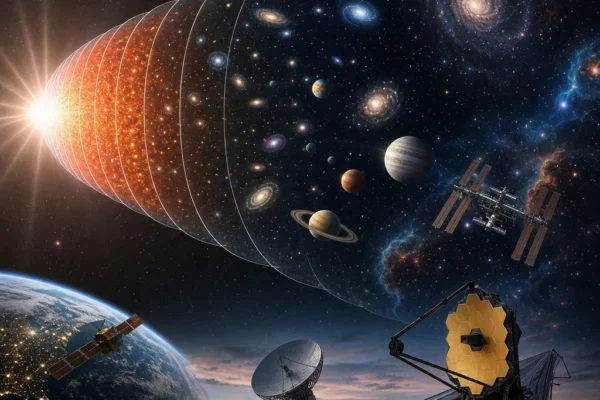
The Science Behind Space Telescopes Like JWST

Space telescopes have transformed our understanding of the cosmos by eliminating atmospheric interference and enabling observations at wavelengths inaccessible from Earth’s surface. Instruments such as the James Webb Space Telescope (JWST) represent the pinnacle of ingenuity, combining advanced optics, ultra-sensitive detectors, and precise control systems. Their capacity to peer deep into the early universe allows…

Read More

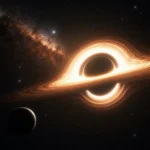
The Science Behind Black Hole Images

The first glimpse into the heart of a galaxy, where light itself is trapped by gravity, marked a milestone in modern astronomy. Through international collaboration and cutting-edge technology, scientists produced the very first image of a black hole, opening a window into realms once deemed beyond human reach. This exploration not only pushes the boundaries…

Read More

The James Webb Space Telescope: Unlocking the Secrets of the Universe

The James Webb Space Telescope stands as a groundbreaking instrument destined to transform our understanding of the universe. Nestled at the second Lagrange point, this observatory uses advanced infrared capabilities to peer further into space and time than ever before. By combining cutting-edge optics, sensitive detectors, and innovative deployment mechanisms, the telescope promises unprecedented views…

Read More

How Quantum Physics Shapes Our Understanding of the Cosmos

Exploring the interplay between quantum mechanics and cosmic evolution reveals surprising connections that reshape our perception of the universe. From the birth of spacetime to the large-scale distribution of galaxies, the invisible rules governing the subatomic realm weave themselves into the grand tapestry of the cosmos. This article delves into how the peculiar principles of…

Read More
Mapping Dark Matter with Gravitational Lensing

Mapping Dark Matter with Gravitational Lensing

Mapping dark matter with gravitational lensing is a groundbreaking approach that has revolutionized our understanding of the universe’s most elusive component. Dark matter, which does not emit, absorb, or reflect light, remains invisible to traditional telescopes. However, its presence can be inferred through its gravitational effects on visible matter, radiation, and the large-scale structure of…

Read More