





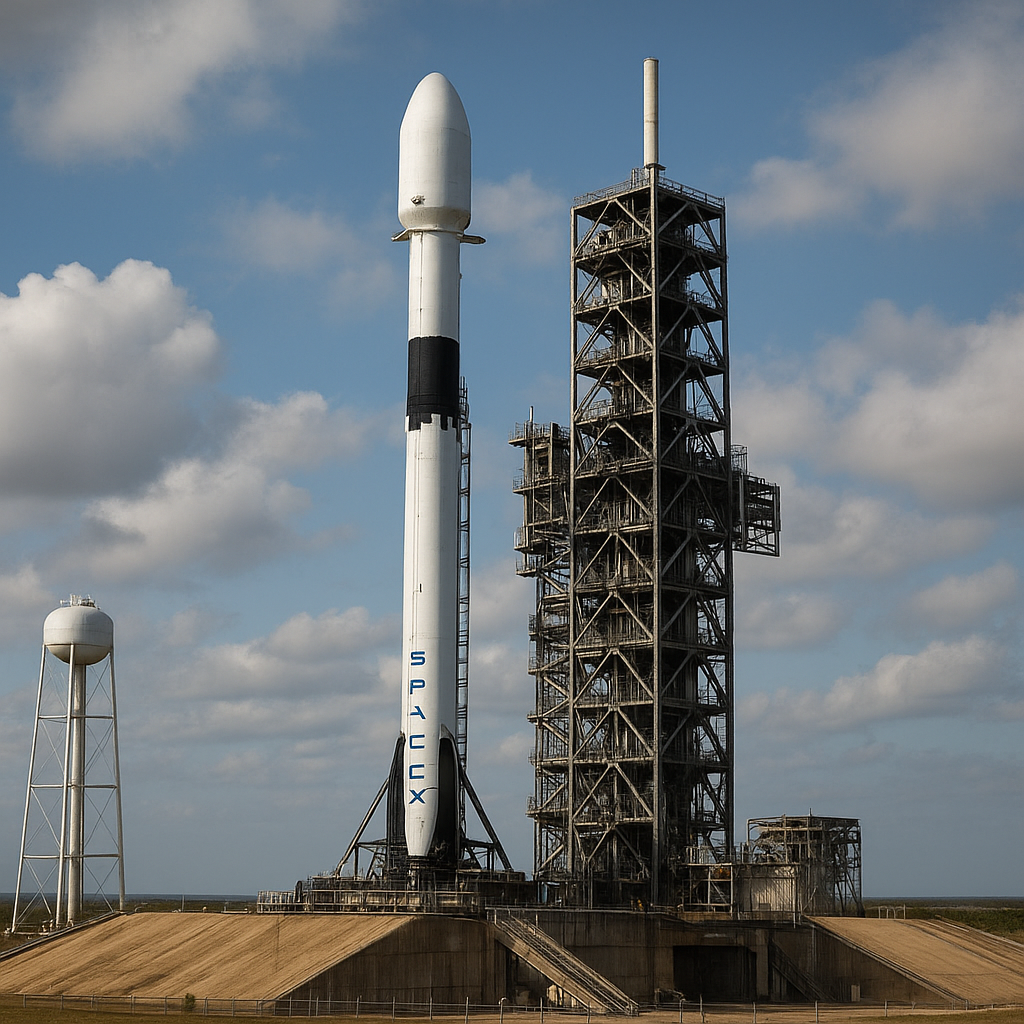
The journey from Earth’s surface to the stars has been dramatically reshaped by a single company whose ambition and achievements have rewritten the rules of spaceflight. By building on decades of aerospace heritage and daring to challenge convention, SpaceX has charted a new course for humanity’s exploration of the cosmos. This article delves into the transformative impact of SpaceX on the space industry, focusing on its revolutionary design philosophies, industry collaborations, and the future it envisions for interplanetary travel.
Reusability Revolution
At the heart of SpaceX’s strategy lies a relentless pursuit of cost-effective launch solutions. Traditional expendable rockets have long dominated the market, each mission requiring a brand-new vehicle at an astronomical price tag. SpaceX shattered this paradigm with the Falcon 9’s first stage capable of returning safely to Earth and flying again. This breakthrough in reusability not only slashed the price of access to orbit but also accelerated launch cadence.
Early development flights demonstrated the technical challenges of controlled descent and precision landing. Combined use of landing legs, grid fins, and sophisticated guidance systems allowed boosters to land on both land-based pads and autonomous drone ships at sea. The success of these landings ushered in a new era:
- Up to 30 percent reduction in launch costs per kilogram
- Shorter turnaround times between missions
- Rapid prototyping and iteration of rocket components
By proving that rockets can reliably fly multiple missions, SpaceX has introduced a fundamental shift toward a more sustainable approach to rocketry, reducing waste and promoting an industrial mindset akin to aviation.
Commercial Partnerships and Industry Impact
SpaceX’s agility and drive for efficiency attracted a diverse array of clients, from government agencies to private corporations. Notable collaborations include:
- NASA: Resupply missions to the International Space Station under the Commercial Resupply Services program, followed by crewed flights via the Crew Dragon capsule.
- International satellite operators seeking competitive launch rates and reliable schedules.
- Defense contractors exploring rapid-response capabilities for national security payloads.
Such partnerships have reshaped industry expectations. Traditional launch providers faced pressure to innovate, leading to fresh investments in reusable technologies and leaner manufacturing processes. SpaceX’s pricing model and transparent manifest availability also democratized market entry for smaller satellite ventures and university research projects.
Technological Breakthroughs
Beyond reusability and commercial success, SpaceX has spearheaded multiple technological advances. Key areas include:
- Merlin Engines: Employing a unique gas-generator cycle, these engines deliver high performance and throttle capability, essential for precision landings.
- Raptor Engines: Utilizing methane and liquid oxygen, Raptor engines mark a shift toward next-generation propulsion, optimizing for power, efficiency, and in-situ resource utilization on Mars.
- Composite cryogenic tanks: Lighter and stronger than traditional alloys, improving payload capacity and overall vehicle structural integrity.
Moreover, SpaceX’s in-house production of major components, from avionics to fairings, exemplifies an integrated manufacturing philosophy. Vertical integration has reduced lead times, improved quality control, and fostered a culture of rapid innovation.
Science Missions and Deep Space Ambitions
While many launches serve commercial and logistical needs, SpaceX’s capabilities have also expanded the frontier of scientific research. Collaborations with international space agencies and research institutions have enabled:
- High-resolution Earth observation satellites for climate monitoring.
- Deep-space probes leveraging cost-efficient launch windows.
- Interdisciplinary experiments aboard the Crew Dragon, including microgravity studies in biotechnology and materials science.
Looking toward the outer Solar System, plans are underway to integrate SpaceX vehicles into lunar and Martian mission architectures. The Starship system, designed for full reusability at an unprecedented scale, aims to transport cargo and humans to the Moon under NASA’s Artemis program and, ultimately, to establish the first sustainable human presence on Mars. The vision entails:
- Deploying refueling tankers in Earth orbit to enable deep-space trajectories.
- Harvesting local resources for fuel production, minimizing Earth-launched mass.
- Founding the initial infrastructure for Martian habitats and research outposts.
Shaping the Future of Galactic Exploration
SpaceX’s achievements have not only disrupted the commercial launch sector but also rekindled global enthusiasm for space travel. By making cutting-edge technologies more accessible, the company has inspired startups, research institutions, and national agencies to pursue bold initiatives. The broader ecosystem stands to benefit from:
- Enhanced supply-chain networks supporting aerospace suppliers and specialized manufacturing.
- Education and workforce development programs cultivating the next generation of aerospace engineers and scientists.
- Increased public engagement through high-profile missions and live webcast coverage.
The trajectory set by SpaceX suggests an era when interplanetary travel evolves from science fiction to engineering reality. Continued focus on sustainability, collaboration, and incremental testing will be critical as humanity pushes beyond low Earth orbit. In doing so, SpaceX not only changes the economic equations but also redefines our collective aspirations among the stars.