





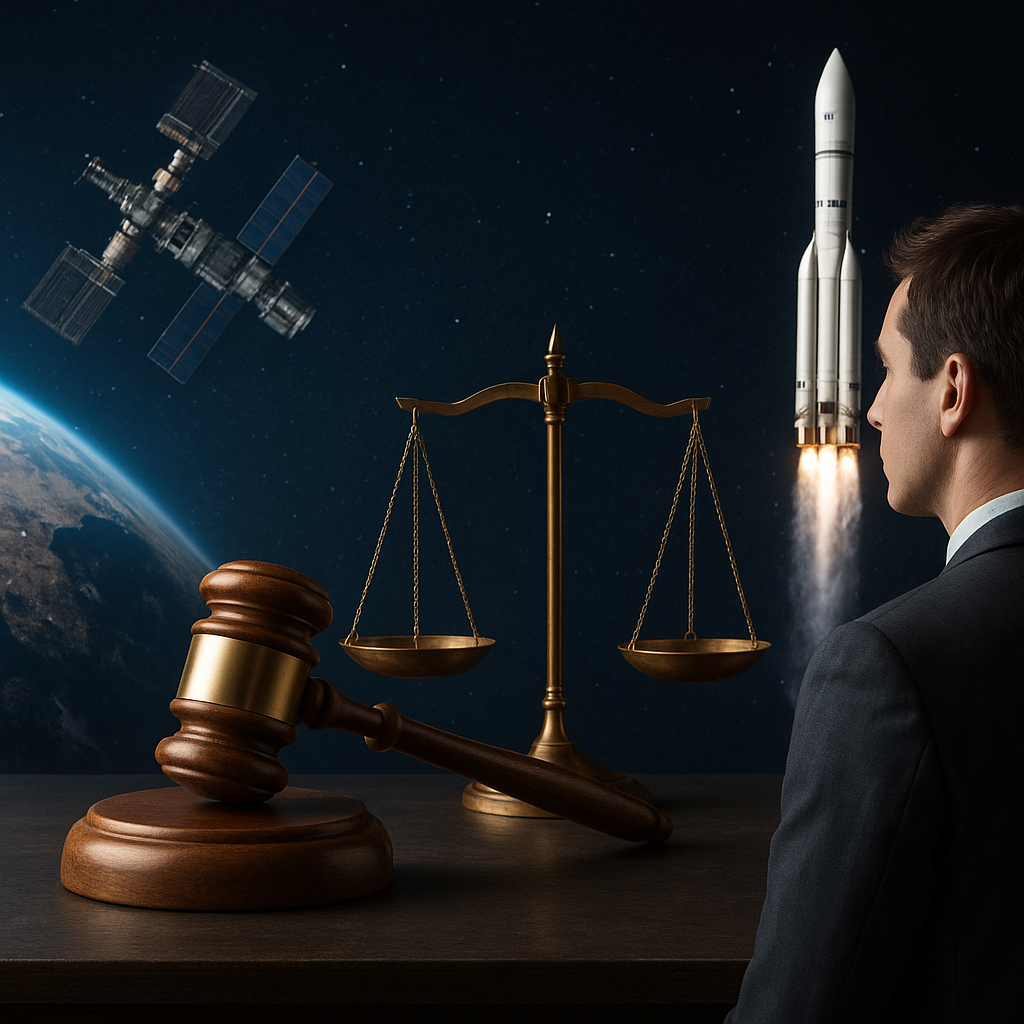
The expansion of commercial ventures beyond Earth’s atmosphere has catalyzed a profound shift in the way nations and organizations address the complex interplay of law, policy, and technology in outer space. As private entities stake their claims to lunar resources, deploy satellite constellations, and plan crewed missions to Mars, a dynamic landscape emerges where traditional governmental regulation meets entrepreneurial innovation. This article examines the evolution of space law in response to the rising influence of private companies, exploring historical foundations, modern regulatory frameworks, existing challenges, and prospective pathways for sustainable and equitable off-planet activity.
Historical Foundations of Space Law
In the aftermath of World War II and the dawn of the Space Age, the world’s superpowers recognized the need for a regulatory framework to govern activities beyond Earth. The 1967 Outer Space Treaty, often hailed as the cornerstone of international treaties on space, established principles that continue to shape legal discourse:
- Non-appropriation of celestial bodies by any sovereign power.
- Peaceful use of outer space, free from weapons of mass destruction.
- State responsibility for national space activities, including those by non-governmental entities.
- Liability for damage caused by space objects.
Subsequent agreements, such as the Rescue Agreement (1968), the Liability Convention (1972), and the Registration Convention (1975), elaborated on obligations relating to astronaut rescue, damage compensation, and object registration. While these instruments solidified legal precedents for state actors, they offered limited guidance on the burgeoning role of the private sector.
Private Sector’s Ascendancy in Outer Space
Over the past two decades, innovative firms have transitioned space activities from purely governmental ventures to commercially driven endeavors. Companies are now manufacturing rockets, mining asteroids, and planning space tourism. Key factors behind this space exploration revolution include:
- Cost reduction through reusable launch vehicles.
- Public-private partnerships for satellite deployment and crewed missions.
- Demand for global connectivity via broadband constellations.
- Commercial interest in in-situ resource utilization on the Moon and asteroids.
With this shift, traditional regulators face the challenge of balancing encouragement of commercial activities with the preservation of space as a peaceful, sustainable domain. The question arises: how can states fulfill their international obligations while fostering entrepreneurial growth?
Evolving Regulatory Frameworks and International Treaties
Many nations have responded by updating domestic legislation to authorize and supervise private enterprises in space. Examples include:
- National Space Acts granting licenses for launch and re-entry operations.
- Export control regimes to monitor sensitive technology transfers.
- Regulations on spectrum allocation for satellite communications.
- Rules on debris mitigation and orbital slot coordination.
Licensing and Oversight Mechanisms
Licensing processes typically require companies to submit comprehensive safety analyses, environmental assessments, and insurance or indemnification plans. Governments leverage these procedures to ensure adherence to their governmental oversight responsibilities under the Outer Space Treaty.
Resource Utilization and Property Rights
The enactment of laws such as the United States Commercial Space Launch Competitiveness Act (2015) and the Luxembourg Space Resources Law (2017) has introduced the concept of private ownership over extracted space resources. While the Outer Space Treaty prohibits national appropriation of celestial bodies, these statutes assert that individuals may retain rights to materials they retrieve from asteroids or lunar surfaces. This emerging doctrine of resource utilization has ignited debates about equitable sharing, environmental stewardship, and the threshold between appropriation and extraction.
Technical and Legal Challenges in the Modern Era
Despite progress, numerous hurdles remain:
- Liability for collisions in congested orbits.
- Regulation of autonomous spacecraft and artificial intelligence systems.
- Protection of space heritage sites and scientific zones.
- Coordination among fragmented national regulations to avoid conflicts.
- Ensuring long-term sustainability through debris mitigation and resource conservation.
The rapid deployment of mega-constellations has exacerbated collision risks, prompting calls for binding international standards on orbital traffic management. Meanwhile, plans for lunar bases and Mars colonies underscore the need for clear guidelines on habitat construction, environmental impact, and human rights beyond Earth.
Future Perspectives for Space Governance
Looking ahead, the global community must strive toward more inclusive and adaptive legal instruments. Potential pathways include:
- Negotiation of new treaties addressing commercial resource extraction, planetary protection, and equitable benefit-sharing.
- Development of multilateral forums where states and private stakeholders collaborate on best practices.
- Implementation of a global registry for autonomous systems and high-risk payloads.
- Investment in capacity-building initiatives for emerging space nations.
- Promotion of public awareness campaigns to foster responsible exploration and usage of outer space.
By forging consensus on these fronts, humanity can harness the full potential of space as a realm of innovation, discovery, and peaceful cooperation, ensuring that the next generation of explorers—both corporate and governmental—upholds the highest standards of safety, fairness, and environmental care.