





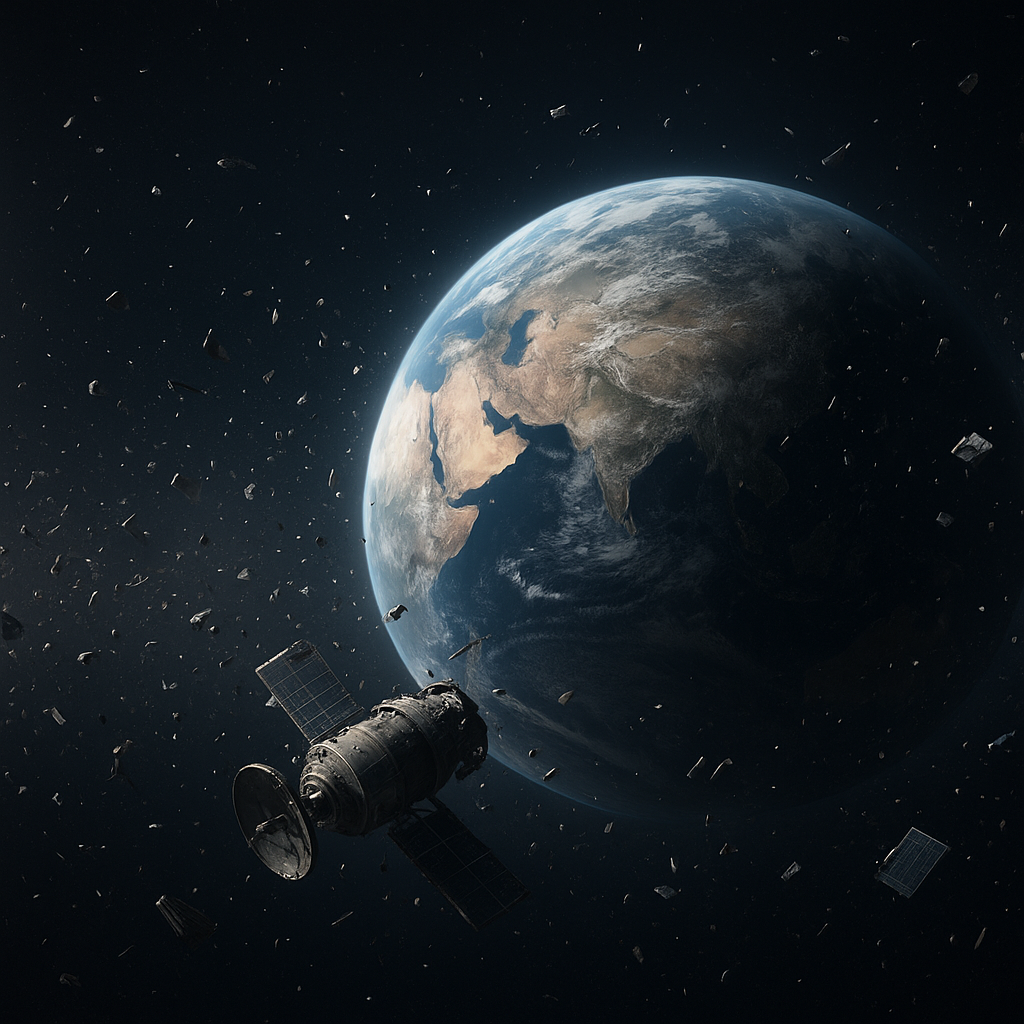
Space around Earth is becoming increasingly crowded with fragments of defunct spacecraft, spent rocket stages, and tiny particles that pose a serious threat to functioning assets. This hidden hazard endangers critical communications, navigation systems, and human missions. Understanding the nature of orbital contamination is essential for preserving the sustainability of our space environment and ensuring safe passage for future explorers.
Origins and Growth of Orbital Contamination
The genesis of anthropogenic debris in orbit dates back to the dawn of the Space Age. As nations launched satellites and crewed vehicles, they inadvertently began filling the near-Earth region with leftover hardware:
- Expended rocket stages that remain in various altitudes
- Disused satellites that no longer maneuver
- Microscopic paint flecks and solid propellant remnants
Over time, minor fragmentation events—such as battery explosions or collisions—have multiplied the debris count. Each collision generates thousands of new shards, increasing the chance of further impacts in a chain reaction known as the Kessler Syndrome. This feedback loop could render certain orbits unusable, threatening services like weather monitoring and global positioning that modern society depends on.
Risks to Operational Satellites and Crews
Even millimeter-sized particles can travel at velocities exceeding 7 km/s, making them capable of punching lethal holes in pressure vessels or disabling critical electronics. The most valuable assets at risk include:
- Satellites providing broadband, television, and military communications
- Navigation constellations like GPS, GLONASS, and Galileo
- Manned spacecraft and orbital stations housing astronauts
Collision Dynamics
A direct impact between two sizable objects can unleash vast clouds of high-speed fragments. These shards pose a threat to other nearby platforms, creating a meteor shower of manmade origin. To minimize this danger, operators maintain constant tracking of debris and perform avoidance maneuvers when collision risk thresholds are exceeded.
Human Safety Concerns
For astronauts on the International Space Station (ISS), even tiny particles can compromise space suits or the module’s walls. Shielding materials and Whipple bumpers help protect the crew, but the growing debris density demands ever more stringent mitigation measures to ensure human missions remain viable.
Mitigation and Active Removal Efforts
Addressing the orbital junkyard requires a multifaceted approach. Key strategies include:
- Designing satellites with end-of-life deorbiting plans
- Implementing space traffic management protocols
- Funding research into active removal methods such as nets, harpoons, and robotic arms
Several pioneering missions have demonstrated technologies to capture and deorbit defunct spacecraft. Such approaches aim to lower their orbits until atmospheric drag causes a controlled burn-up over the ocean. Agencies collaborate on standardized guidelines forcing manufacturers to limit post-mission lifetimes to under 25 years for objects in low-Earth orbit.
The Path Forward for Orbital Sustainability
Ensuring the near-Earth environment remains accessible calls for cooperation among government agencies, private companies, and international bodies. Critical actions involve:
- Expanding debris tracking networks to detect smaller fragments
- Promoting sustainability standards for satellite constellations
- Investing in rapid-response systems to neutralize high-risk debris
- Encouraging data-sharing on maneuver plans and collision avoidance
With the anticipated surge in mega-constellations, the window to stem the debris tide is narrowing. By uniting technical innovation with robust policy frameworks, we can safeguard orbital highways for the next generation of explorers—ensuring that humanity’s reach for the stars remains unhindered by the remnants of its past ventures.