

Since the landmark discovery of ‘Oumuamua in 2017, astronomers have been forced to rethink many assumptions about our celestial neighborhood. This elongated object, originating from beyond the Solar System, has ignited heated debates about the nature of interstellar visitors, challenged existing models of planetary formation, and compelled researchers to refine observational techniques. As the first confirmed interstellar asteroid, ‘Oumuamua stands as a tantalizing messenger from distant star systems, carrying with it secrets that may transform our understanding of the cosmos.
Encountering the First Interstellar Visitor
The Pan-STARRS telescope in Hawaii detected an object moving on a steeply hyperbolic trajectory that could not be explained by the Sun’s gravitational pull alone. Named ‘Oumuamua—Hawaiian for “scout” or “messenger”—it traveled at approximately 87 km/s relative to the Sun, far exceeding typical velocities for comets or asteroids bound to our system. Its discovery marked the first time scientists had observed a natural object whose path clearly originated from interstellar space.
While comets and other Solar System bodies follow near-parabolic or elliptical orbits, ‘Oumuamua’s incoming and outgoing arcs fit a hyperbola, indicating an origin outside our gravitational domain. Researchers rapidly mobilized ground and space-based assets in an effort to capture as much data as possible before the object faded beyond detection. Despite this urgency, observations were limited to a brief window of under three weeks, forcing teams to work with incomplete datasets.
Initial Spectral Analysis
Spectroscopy of ‘Oumuamua revealed a moderately red surface, reminiscent of organic-rich materials found on some Kuiper Belt Objects. However, its colors did not align perfectly with any known class of Solar System bodies, leaving open the possibility of exotic composition or a unique surface weathering process. No distinct emission lines from gas species—such as CN or C2—were detected, suggesting minimal or no outgassing typically associated with comets. This absence complicates efforts to classify it as purely cometary.
Unusual Physical Characteristics
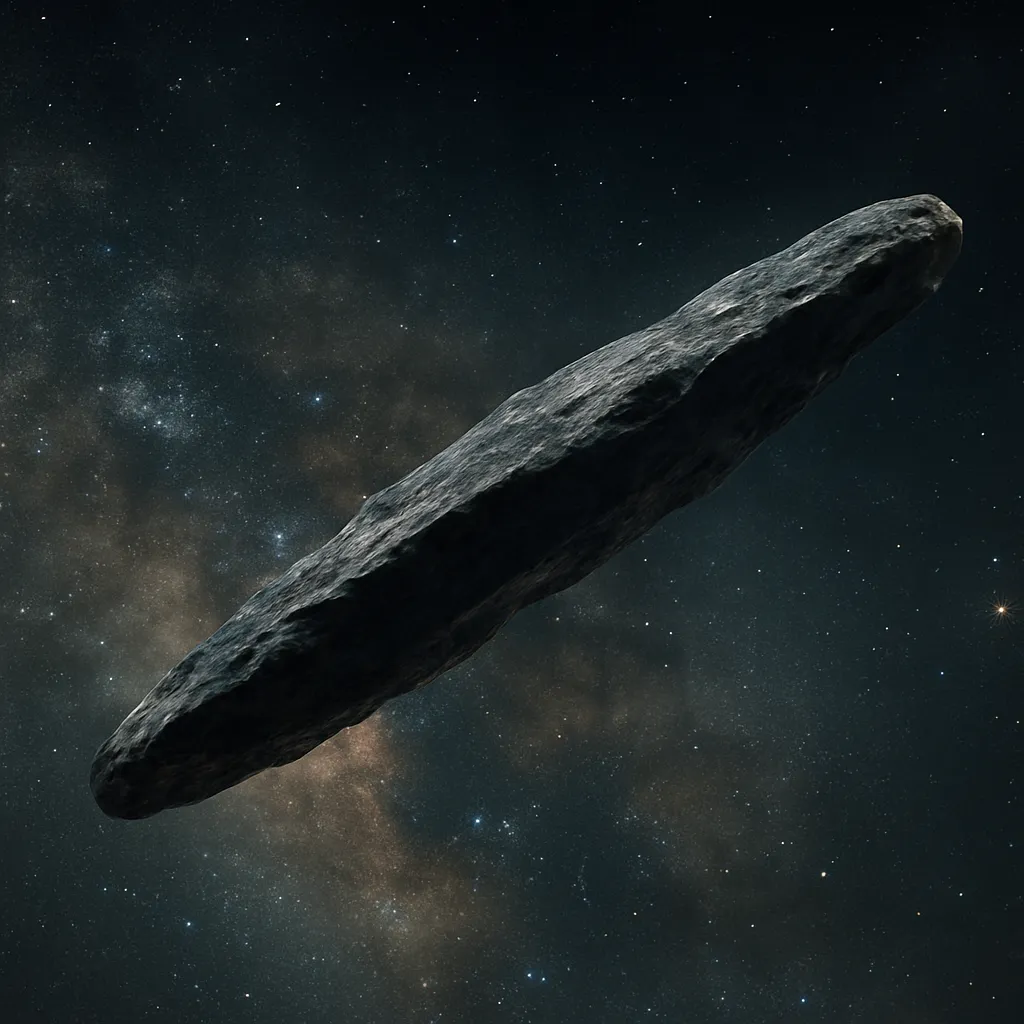
Beyond its trajectory, several physical traits of ‘Oumuamua defied conventional expectations. Its light curve—variations in brightness over time—displayed dramatic fluctuations, implying a highly elongated or flattened shape. Models proposed dimensions ranging from approximately 100 meters by 10 meters, giving an aspect ratio possibly as high as 10:1 or more. Such an extreme geometry is rare among asteroids and comets observed in our system.
Shape and Structure
- Elongated form: Rapid brightness changes suggested a cigar-like or pancake-like configuration.
- Rotation: Tumbling motion with a complex spin state, rather than a simple rotation about a fixed axis.
- Surface: A dark, possibly carbon-rich exterior, with albedo (reflectivity) estimates around 0.04–0.1.
The uncertainty in shape arises partly from limited viewing angles and signal-to-noise constraints. Some researchers have proposed that ‘Oumuamua could be a cluster of loosely bound fragments or even a thin, pancake-shaped body, spinning in a manner that minimizes structural stress.
Non-Gravitational Acceleration
One of the most perplexing observations was the detection of slight acceleration away from the Sun that could not be fully accounted for by gravity alone. In comets, this effect typically results from outgassing—jets of vaporized volatiles providing thrust. However, no coma or tail was seen around ‘Oumuamua. Proposed explanations include:
- Release of molecular hydrogen trapped within its ice matrix.
- Radiation pressure acting on an ultra-thin, sail-like structure.
- Dust emissions too faint to detect with current instruments.
Some more speculative theories even flirt with the idea of artificial origin, postulating a solar sail or probe sent by an alien civilization. While such notions capture headlines, the scientific community generally favors natural processes pending stronger evidence.
Detection and Observation Techniques
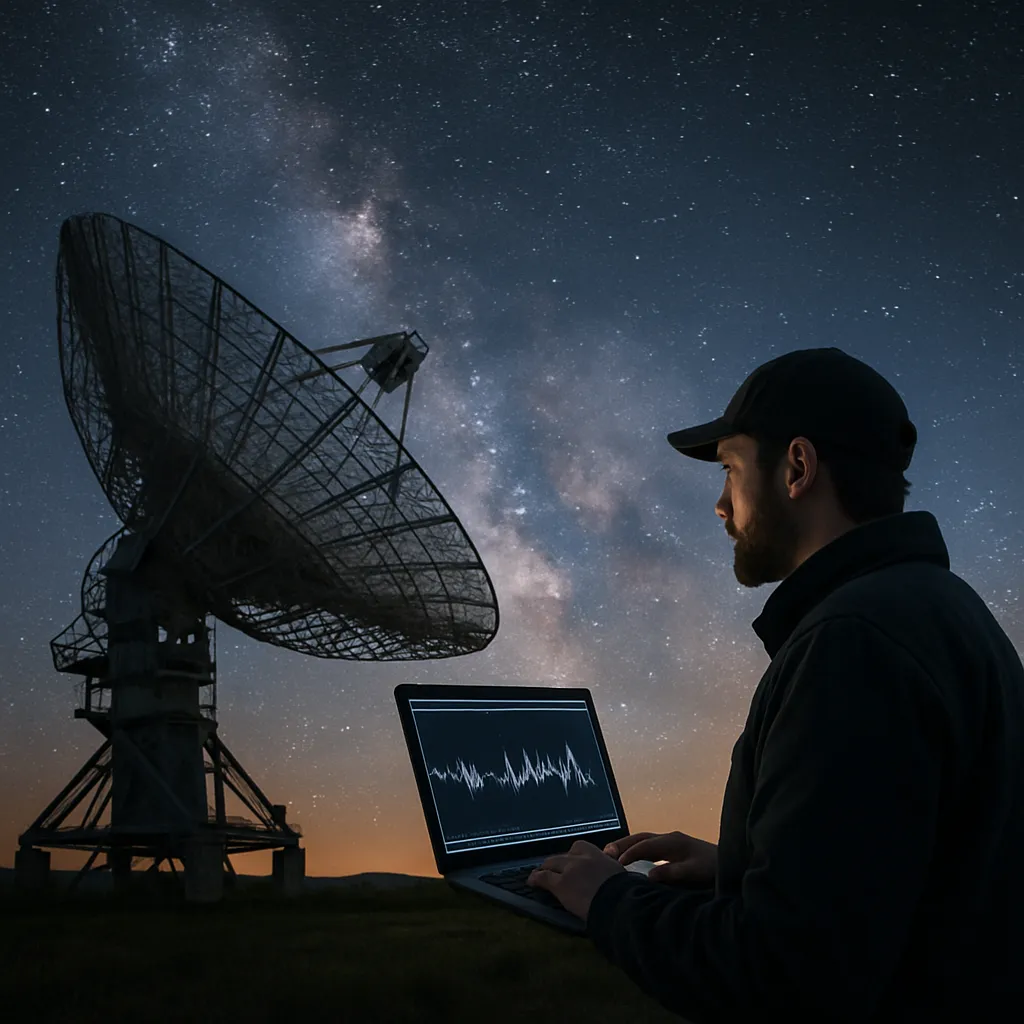
Tracking a fast-moving, dim object like ‘Oumuamua requires specialized search strategies. Surveys such as Pan-STARRS, the Catalina Sky Survey, and the ATLAS project continuously scan large swaths of the sky, looking for transients that could signify new asteroids, comets, or interstellar visitors. Key methods include:
- Wide-field imaging: Capturing nightly snapshots to detect moving point sources against background stars.
- Automated pipelines: Algorithms that differentiate real objects from artifacts, noise, or known bodies.
- Rapid follow-up: Coordination with other telescopes to obtain color photometry and spectra.
Advances in detector sensitivity and data processing now allow astronomers to identify fainter objects earlier, extending the observable window. Upcoming facilities like the Vera C. Rubin Observatory’s Legacy Survey of Space and Time (LSST) promise to revolutionize the field, potentially boosting detection rates of interstellar objects from a few per decade to multiple per year.
Theoretical Implications for Science
Every interstellar visitor offers a unique opportunity to sample material from other star systems without launching an expensive space mission. ‘Oumuamua has raised pivotal questions:
- How common are solid fragments ejected during planet formation processes?
- What size distribution and chemical makeup do interstellar asteroids or comets exhibit?
- Can these travelers deliver organic compounds or water to new systems, influencing astrobiology?
Computer simulations of gravitational interactions in young planetary systems predict that countless minor bodies are flung into interstellar space by giant planets. If so, our Galaxy could be teeming with these wanderers. Determining their frequency and properties will refine models of how planets assemble and evolve.
Challenges to Existing Models
Traditional dynamical theories assumed that most ejected material would be icy, akin to comets from our Kuiper Belt. Yet, ‘Oumuamua’s lack of substantial outgassing and unusual shape hint at a broader diversity. Perhaps rocky or metallic fragments can survive long interstellar journeys, or surface ices may sublimate and leave behind a refractory crust that masks volatile activity.
Future Prospects
To fully exploit interstellar visitors, scientists propose missions designed for rapid interception. Concepts range from dedicated probes on standby, ready to launch at a moment’s notice, to swarms of small, solar-powered craft capable of high-thrust maneuvers. Instruments could perform in situ analysis of:
- Spectroscopy: Identify elemental and molecular composition.
- Microscopy: Examine dust grain structure and possible bio-signatures.
- Magnetometry: Measure any intrinsic magnetic fields or charged particles.
Such missions would represent a paradigm shift, transforming passive observation into proactive exploration of materials born around distant stars.
Broader Context in Cosmic Exploration
‘Oumuamua is not alone. In 2019, comet 2I/Borisov became the second confirmed interstellar object, arriving with a more conventional cometary profile and vigorous outgassing. Together, they form the vanguard of a new class of celestial phenomena—each teaching us about the diversity of processes in planetary nurseries across the Milky Way.
By comparing interstellar visitors with native Solar System bodies, astronomers can disentangle universal traits from local peculiarities. This comparative approach promises to shed light on:
- The prevalence of water and organic molecules beyond our system.
- Variations in dust-to-ice ratios across different star-forming environments.
- The role of stellar radiation and galactic cosmic rays in altering surface chemistry over millions of years.
Each new detection refines our statistical understanding, enabling better predictions of encounter rates and guiding the design of next-generation observatories and missions.
Conclusion
Interstellar interlopers like ‘Oumuamua represent both a scientific challenge and an unparalleled opportunity. Their unexpected behaviors urge a reexamination of planetary formation theories, while their fleeting appearances demand rapid-response observation strategies. As detection capabilities advance and theoretical models evolve, these cosmic scouts will continue to stretch the frontiers of human knowledge, inviting us to ponder our place among the stars.