


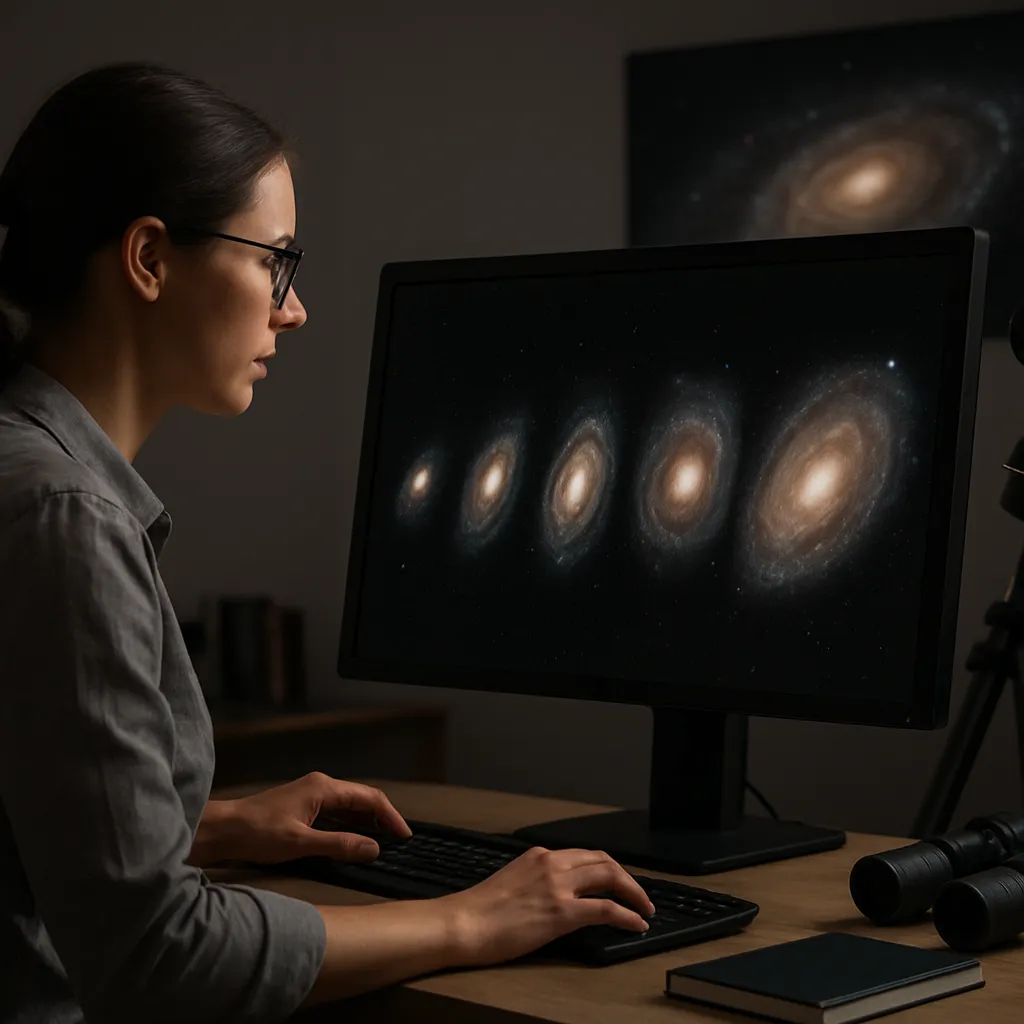
The quest to understand how galaxies form and transform over billions of years lies at the heart of modern astrophysics. By combining advanced telescopes, detailed computer simulations, and innovative analytical methods, astronomers piece together the story of cosmic evolution. This article examines the key techniques and discoveries that shed light on the lifecycle of these majestic star systems.
Observational Techniques for Unveiling the Universe
Mapping the distant cosmos requires a variety of instruments and methodologies. Each approach reveals unique aspects of galaxy properties, from their stellar populations to the surrounding intergalactic medium.
Multiband Imaging
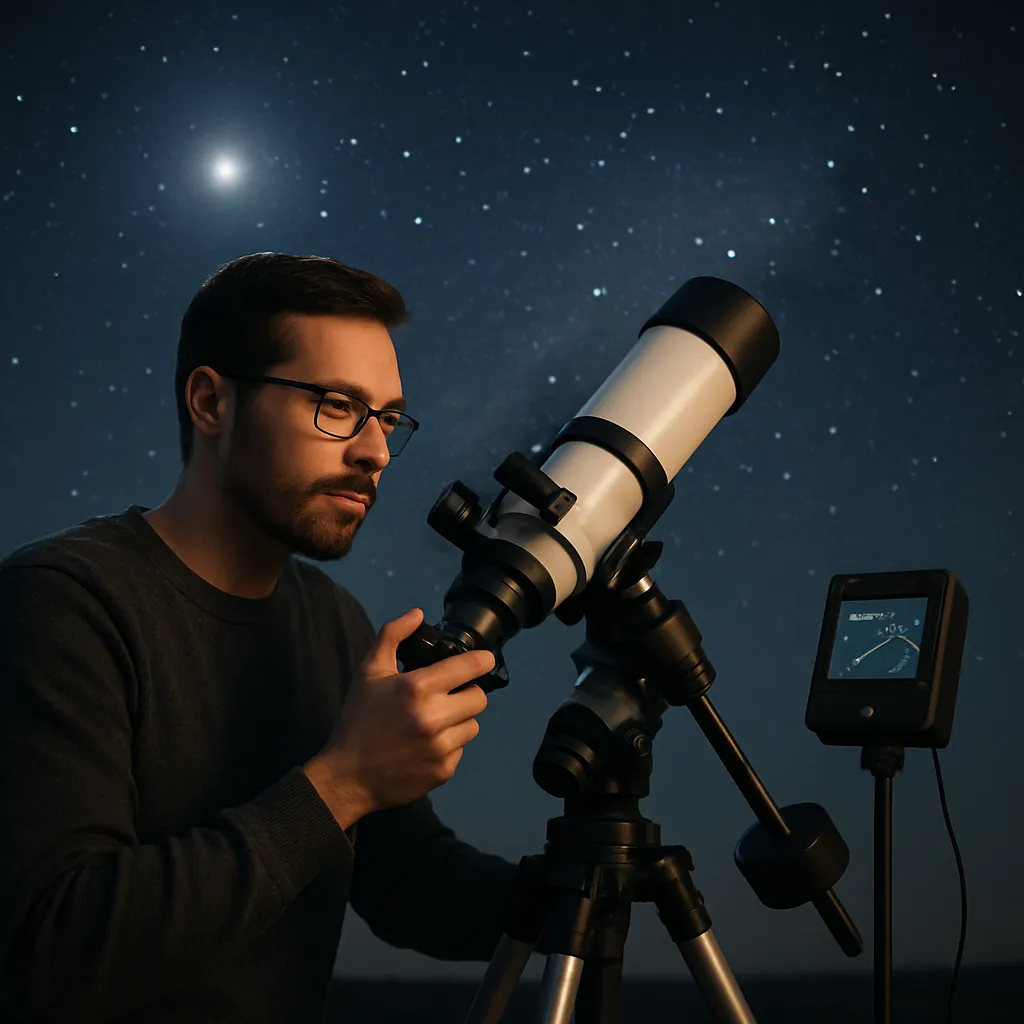
- Optical Telescopes: Capture starlight emitted in visible wavelengths, revealing structures like spiral arms or elliptical bulges.
- Infrared Observatories: Pierce through dust to expose hidden star-forming regions and evolving stellar nurseries.
- Ultraviolet Missions: Detect young, massive stars whose energetic radiation shapes galaxy growth.
Spectroscopy and Redshift Measurements
By spreading light into a spectrum, astronomers decode chemical compositions, temperatures, and velocities. Key tools include:
- Spectrographs on ground-based telescopes to measure emission and absorption lines.
- High-resolution instruments aboard space telescopes, critical for pinpointing tiny shifts in wavelengths.
- Redshift Surveys: Systematic campaigns that assign each galaxy a distance via the Doppler-induced redshift of its spectral lines, thereby constructing a 3D map of the cosmic web.
Radio and Submillimeter Astronomy
Long-wavelength observations trace cold gas reservoirs—primordial fuel for star and galaxy growth. Notable facilities:
- The Atacama Large Millimeter/submillimeter Array (ALMA), which reveals molecular clouds and early galaxy assembly.
- The Square Kilometre Array (SKA) in planning, expected to detect faint signals of hydrogen across cosmic time.
Theoretical Frameworks and Simulations
Observations alone cannot fully capture the complexity of galaxy formation. Theoretical models and large-scale simulations bridge this gap by recreating virtual universes governed by fundamental forces.
Dark Matter Halos and Cosmic Structure
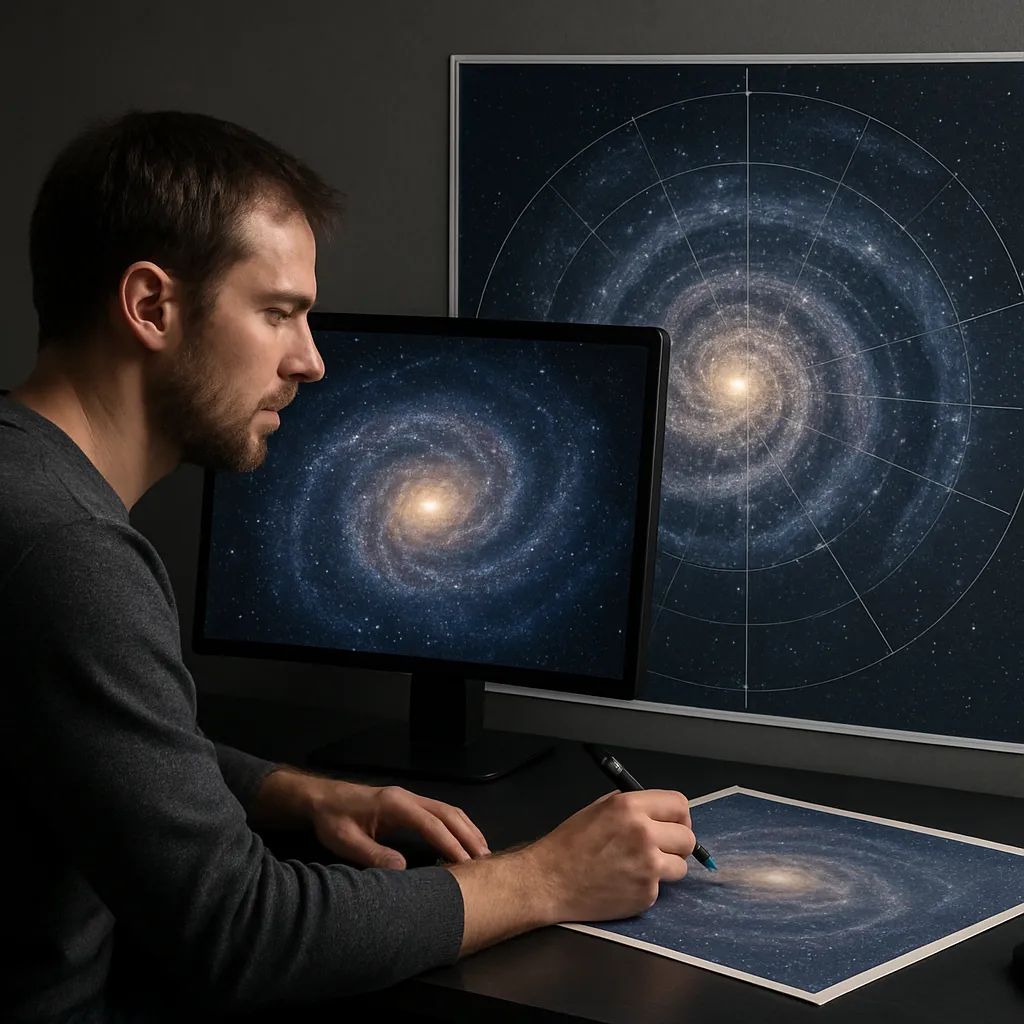
Galaxies reside within massive dark matter halos that dominate gravitational dynamics. Large N-body simulations track millions of dark matter particles to reveal:
- Filamentary patterns known as the cosmic web.
- Halo mass functions, predicting the abundance of galaxy hosts at different epochs.
- Merger histories that drive bursts of star formation and morphological transformations.
Hydrodynamic Simulations
State-of-the-art simulations incorporate gas physics, cooling, feedback from supernovae, and active galactic nuclei (AGN). Examples include:
- Illustris and IllustrisTNG: Providing detailed predictions of galaxy shapes, colors, and gas content.
- EAGLE (Evolution and Assembly of GaLaxies and their Environments): Emphasizing realistic baryonic processes.
These digital laboratories test how gravity, pressure forces, and feedback processes sculpt galaxies across time.
Semi-Analytical Models
Offering computational efficiency, semi-analytical approaches embed simplified prescriptions for star formation and feedback within dark matter merger trees. They help interrogate parameter sensitivities and forecast statistical trends in large surveys.
Tracing Galaxy Evolution Through Cosmic Time
Combining observations and models enables a timeline of galaxy development from the first luminous clumps to present-day behemoths. Key epochs include:
The Epoch of Reionization
Roughly 400 million years after the Big Bang, the first galaxies emitted ultraviolet radiation that ionized the intergalactic medium. Indicators of this period:
- Detection of Lyman-alpha emitting galaxies at high redshift (z > 6).
- Constraints from the cosmic microwave background on the timing of reionization.
Peak of Cosmic Star Formation
Between redshifts 1 and 3 (about 8–12 billion years ago), the Universe underwent its most vigorous phase of star formation. Surveys show:
- A steep decline in star formation rate since that peak.
- The rise of massive elliptical galaxies through mergers, leading to quenching of star formation.
Modern Galaxy Populations
In the local Universe, galaxies exhibit a bimodal distribution:
- Star-forming disks with blue colors and ongoing gas accretion.
- Red, dead ellipticals dominated by old stars and little cold gas.
Understanding how galaxies transition between these states remains a central challenge, implicating processes like gas stripping, AGN feedback, and environmental effects in galaxy clusters.
Future Frontiers in Galactic Research
The next generation of observatories and theoretical advancements promises even deeper insights:
James Webb Space Telescope (JWST)
With unprecedented infrared sensitivity, JWST will probe the first billion years, directly observing formation sites of early galaxies and the buildup of stellar populations.
Extremely Large Telescopes (ELTs)
Ground-based giants like the ELT and Thirty-Meter Telescope will achieve angular resolutions allowing detailed spectroscopy of individual stars in nearby galaxies, unlocking their assembly histories.
Advances in Computational Power
Exascale computing will enable full-physics simulations at resolutions matching the scale of star-forming regions, refining our grasp of feedback and metal enrichment across cosmic scales.
Synergy of Multi-Messenger Astronomy
Gravitational wave detections from compact object mergers, combined with electromagnetic observations, open new avenues for studying the role of mergers in galaxy evolution and black hole growth.
As observational capabilities expand and theoretical tools grow more sophisticated, astronomers edge ever closer to a comprehensive narrative of how the Universe’s grandest structures came to be.