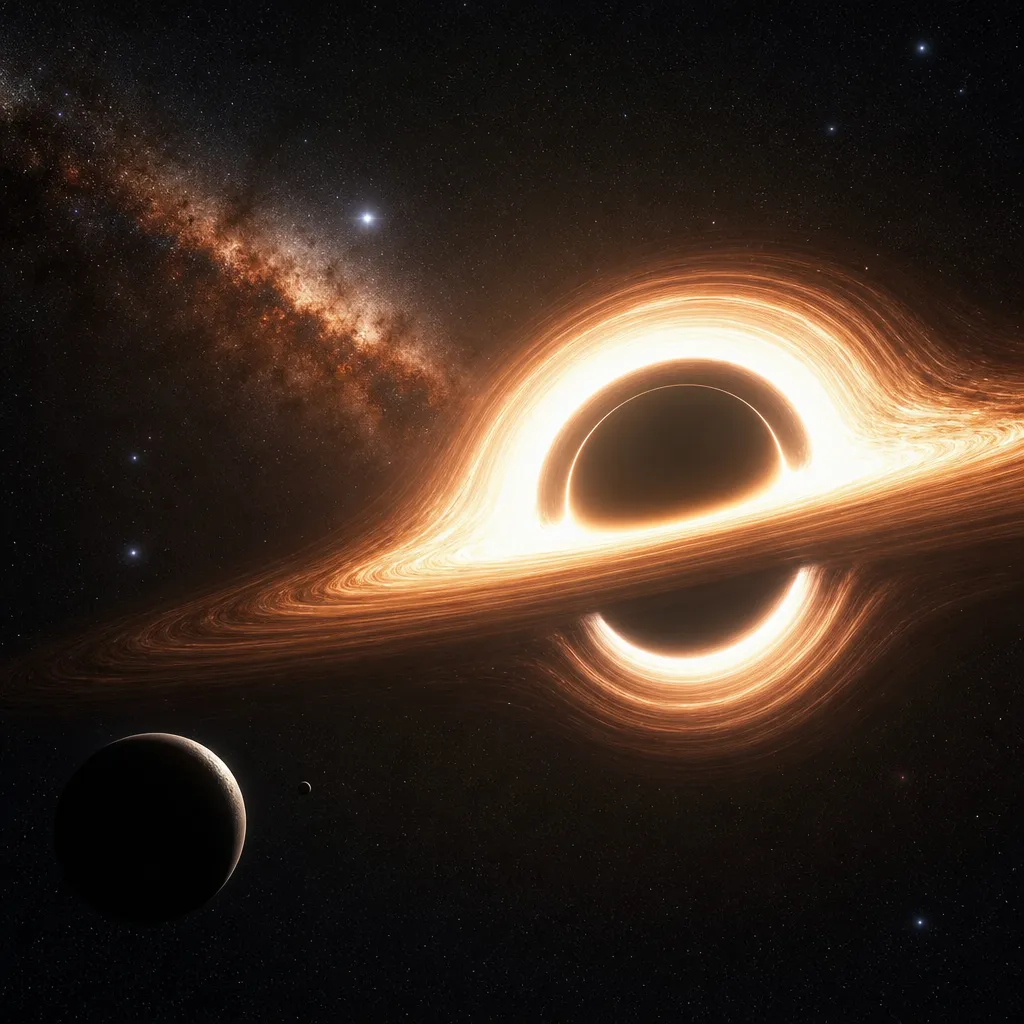


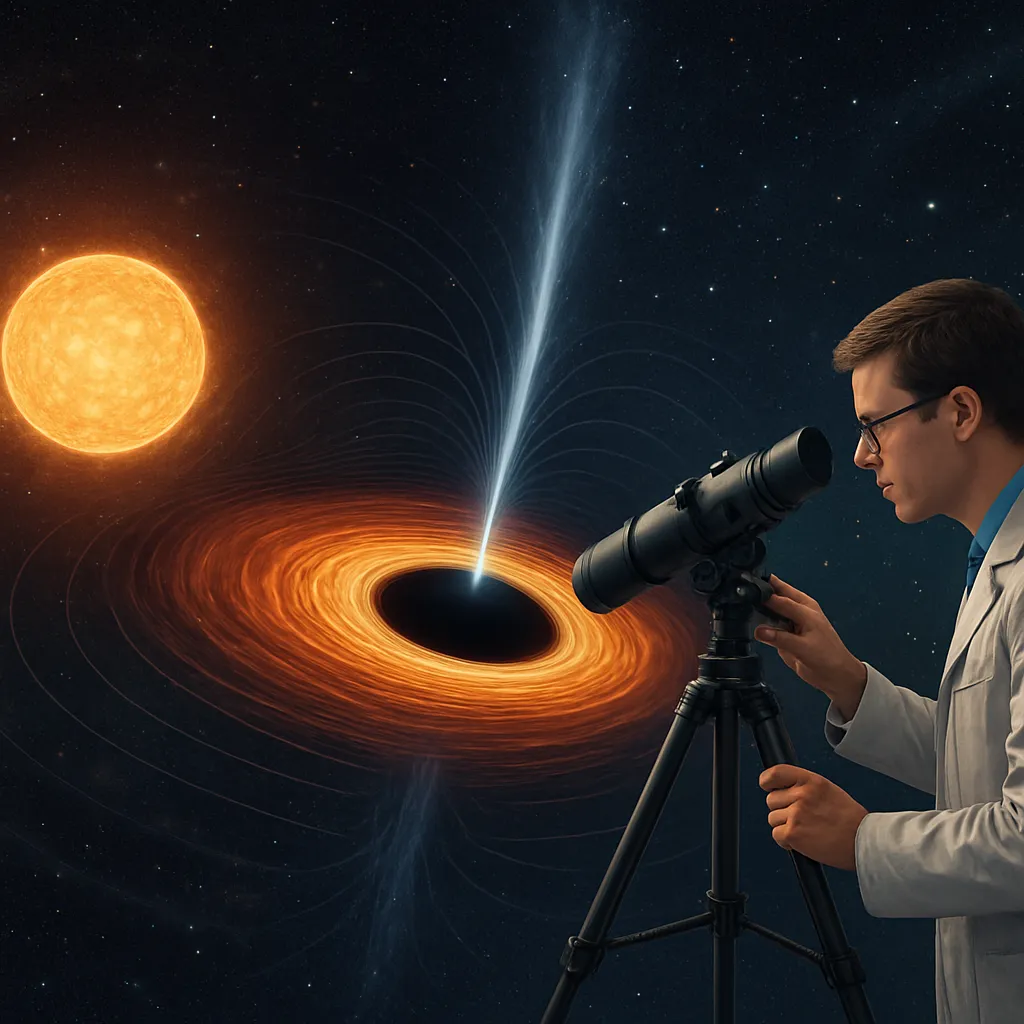
Invisible yet immensely powerful, the cosmic enigmas known as black holes challenge our understanding of the universe. Despite their name, these objects do not swallow light outright; instead, their intense gravity prevents even photons from escaping once they cross a critical boundary. Over the past century, astronomers have devised ingenious methods to reveal these hidden giants, relying on the behavior of nearby stars, energetic emissions, and ripples in spacetime itself. By combining cutting-edge technology with theoretical advancements, researchers continue to refine their strategies for the indirect detection of black holes, shedding new light on fundamental physics and the ultimate fate of massive stars.
Astronomical Clues from Stellar Orbits
One of the most compelling pieces of evidence for the existence of a singularity at the heart of our galaxy comes from tracking the orbits of stars near Sagittarius A*. High-precision infrared telescopes capture the motion of these stars as they whip around an invisible massive object. By applying Kepler’s laws and general relativity corrections, astronomers calculate the mass concentrated in an area smaller than our solar system. The extraordinary acceleration and high orbital speeds of stars like S2 reveal an unseen mass of about four million times that of the Sun.
Beyond the Galactic Center, binary systems offer another window. In X-ray binaries, a normal star transfers material onto a compact companion. If the companion’s mass exceeds three solar masses, it cannot be a neutron star—strongly suggesting a black hole. Observations in visible light track the companion’s motion, while X-ray observatories detect the high-energy signatures produced by infalling gas. By measuring Doppler shifts in the star’s spectrum and modeling the binary dynamics, researchers determine the mass function, confirming the presence of a compact object too massive and dense to be anything but a black hole.
- Precision astrometry of stars near galactic centers
- Spectroscopic measurements of binary companions
- Time-domain surveys for variable orbital motion
X-ray Emissions and Accretion Physics
Black holes on their own emit no light, but matter spiraling inward forms an accretion disk that can heat up to millions of degrees. This superheated plasma radiates strongly in the X-ray band. Space-based observatories such as Chandra and XMM-Newton monitor this high-energy glow, pinpointing sources with flux variations on timescales as short as milliseconds. Such rapid flickering implies a compact emitting region, consistent with the expected size of the innermost stable orbit around a black hole.
When material accumulates rapidly, it can produce powerful relativistic jets visible in radio and X-ray frequencies. The Very Long Baseline Array and other interferometers image these jets, tracing their orientation and velocity. Since jets align with the black hole’s rotation axis, their morphology provides clues about the spin and magnetic field configuration near the event horizon. Combining jet kinematics with spectral analysis of the accretion disk yields insights into the mass accretion rate and efficiency of energy conversion, further validating the black hole paradigm.
Key observational techniques
- Spectral fitting of thermal disk emission
- Time-lag analysis between X-ray and radio bands
- High-resolution interferometry of relativistic jets
Gravitational Waves: Listening to the Cosmos
The groundbreaking detections by LIGO and Virgo have opened a new observational window through gravitational waves. When two black holes spiral inward and merge, they produce ripples in spacetime that travel across the universe at the speed of light. These distortions stretch and squeeze distances by less than a proton’s width, yet ultra-sensitive laser interferometers can capture these signals. Each detection encodes information about the masses, spins, and orbital eccentricities of the progenitor black holes.
Analysis of the waveform’s inspiral, merger, and ringdown phases allows astrophysicists to test general relativity in the strong-field regime. The remnant black hole’s “ringdown” frequency uniquely identifies its final mass and spin, offering a stringent consistency check with theoretical models. Additionally, gravitational wave astronomy can probe populations of black holes invisible to electromagnetic telescopes, including mergers occurring in dust-obscured regions or at high redshifts. This new channel complements traditional techniques, enriching our understanding of black hole demographics and evolution.
Event Horizon Imaging and Future Innovations
In 2019, the Event Horizon Telescope collaboration released the first image of a black hole’s shadow in the galaxy M87. By linking radio dishes across the globe, the EHT achieved an effective aperture size comparable to Earth. The silhouette revealed a dark central region surrounded by a bright emission ring—an unmistakable signature of light bending around the event horizon. This milestone confirmed predictions of general relativity under extreme conditions.
Looking ahead, space-based interferometers like the proposed LISA mission will detect lower-frequency gravitational waves from supermassive black hole binaries. Simultaneously, next-generation X-ray observatories such as Athena aim to perform high-resolution spectroscopy of accretion flows, mapping the spacetime geometry near rotating black holes. Pulsar timing arrays may uncover nanohertz gravitational waves generated by thousands of orbiting supermassive black hole pairs, offering a statistical view of cosmic mergers.
- Submillimeter arrays for enhanced shadow imaging
- Laser Interferometer Space Antenna (LISA) for low-frequency waves
- Pulsar timing experiments for nanohertz wave detection
By uniting electromagnetic observations, gravitational wave signals, and refined theoretical models, scientists continue to unravel the mysteries of cosmic giants. Each method provides a complementary perspective on how black holes grow, interact, and shape the galaxies around them. As technology advances, the boundaries of what we can detect and understand will continue to expand, promising deeper insights into one of nature’s most fascinating phenomena.