
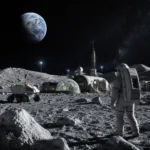
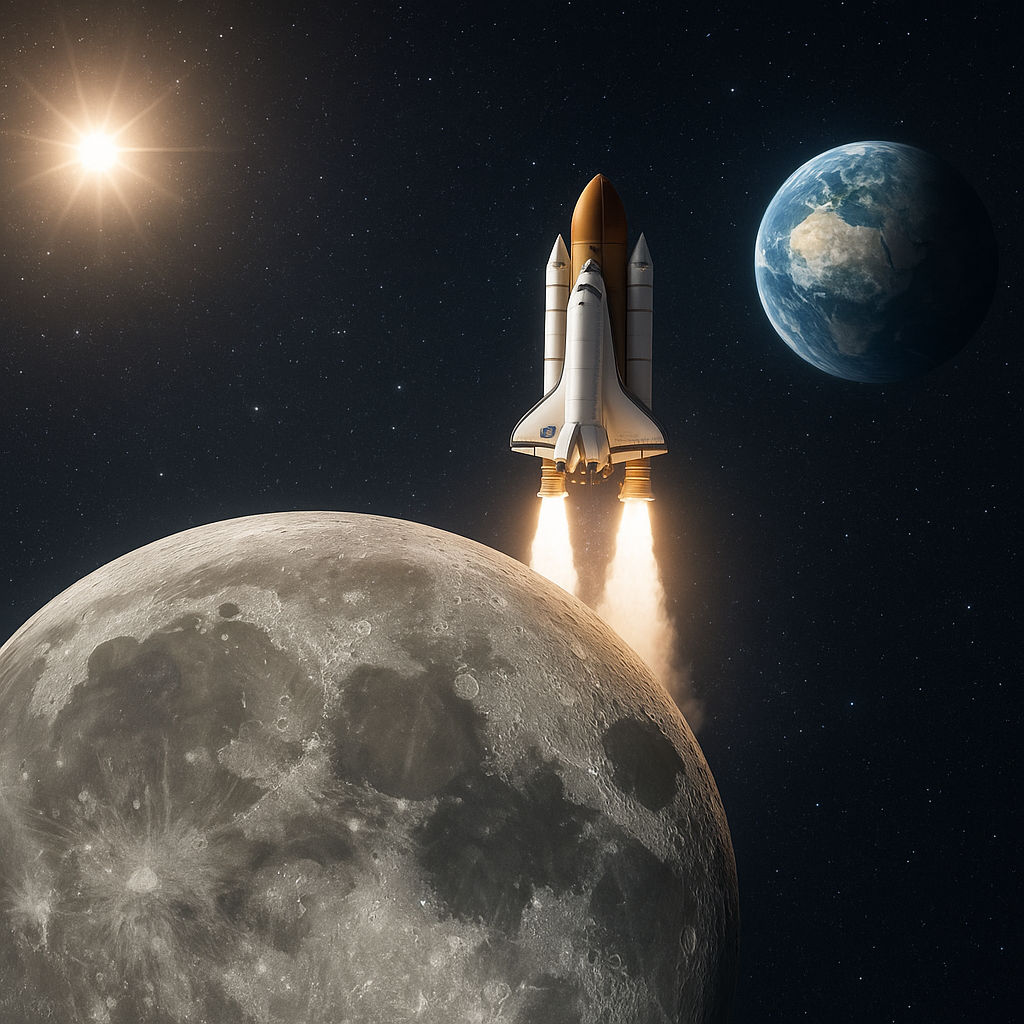
Humanity’s aspirations beyond Earth have always been guided by a quest to expand our horizons and deepen our understanding of the cosmos. Among celestial bodies, the Moon stands out as an ideal stage for the next grand leap in exploration. Its proximity, unique environment, and untapped potential make it a compelling focal point for developing technologies and capabilities that will shape the future of space travel and scientific discovery.
Advantages of the Moon’s Environment
The lunar surface offers numerous benefits compared to launching directly from Earth. By leveraging the Moon’s characteristics, space agencies and private enterprises can achieve milestones that would otherwise remain out of reach.
Lower Gravity and Delta-V Requirements
- The Moon’s gravity is only about one-sixth that of Earth’s, significantly reducing the propulsion energy needed to escape its pull.
- Launching from the lunar surface requires a delta-v of roughly 2.4 km/s versus Earth’s 9.4 km/s, translating to smaller rockets and lower mission costs.
Abundant Natural Resources
- Lunar regolith contains oxygen, silicon, and metals such as iron and aluminum, which can be extracted for construction and life support.
- Water ice in permanently shadowed craters can be processed into drinking water, breathable oxygen, and rocket fuel components like hydrogen.
- In-situ resource utilization (ISRU) on the Moon lays the groundwork for a truly sustainable space economy by reducing dependency on Earth-supplied cargo.
Stable Platform for Astronomy and Research
- The far side of the Moon is shielded from terrestrial radio interference, offering an unparalleled site for astronomy, especially low-frequency radio observations.
- Microgravity environments in lava tubes and pit craters provide natural laboratories for studying biology, materials science, and medicine under reduced gravity conditions.
Establishing Lunar Infrastructure
Building a robust infrastructure on the Moon is a multi-stage endeavor that encompasses habitat construction, power generation, and transportation networks. Each element is critical for long-term habitation and mission support.
Modular Habitats and 3D Printing
- 3D printing technologies using local regolith allow the construction of protective shelters without hauling heavy building materials from Earth.
- Modular habitat units can be expanded over time, creating research labs, living quarters, and storage facilities for extended crew missions.
Renewable Energy Systems
- Solar power installations on peaks of eternal light near the lunar poles can provide nearly continuous energy.
- Energy storage solutions, such as fuel cells or advanced batteries, ensure power availability during the 14-day-long lunar night.
Surface Transportation and Communication
- Rovers and autonomous cargo vehicles will establish reliable transport for crew, equipment, and extracted resources across varied terrain.
- A network of lunar satellites and surface relays ensures high-bandwidth communication between the Moon, Earth, and orbiting spacecraft.
The Moon as a Springboard for Deep Space Exploration
With established bases and resource operations, the Moon becomes a strategic hub for missions venturing deeper into our solar system and beyond.
Fuel Depots and Refueling Stations
- Processing water ice into hydrogen and oxygen enables on-site refueling depots, drastically reducing launch mass from Earth.
- Spacecraft can replenish propellant before heading to Mars, asteroids, or other destinations, increasing payload capacity and mission flexibility.
Testing Advanced Innovation and Technologies
- The Moon provides a relatively close proving ground for life support systems, radiation shielding, and closed-loop ecological regeneration.
- Testing new propulsion methods, such as nuclear thermal or electric engines, becomes safer and more practical with nearby emergency return options.
A Gateway to Colonization and Long-term Settlement
- Demonstrating sustained human presence on the Moon builds confidence and experience for future colonies on Mars and elsewhere.
- Lunar settlements can evolve into self-sufficient communities, fostering international cooperation and commercial ventures in low gravity.
The Moon’s unique combination of accessible resources, manageable gravity, and strategic position makes it an indispensable platform for the next generation of space endeavors. Its surface will host the technologies and infrastructures that drive interplanetary travel, catalyze scientific breakthroughs, and ultimately pave the way for humankind’s permanent foothold beyond Earth.