

Galvanizing the aerospace community and capturing the public imagination, SpaceX has introduced an unprecedented vehicle known simply as Starship. Conceived to extend humanity’s reach beyond Earth, it represents a paradigm shift in space architecture. This article delves into the origins, technical breakthroughs, and far-reaching consequences of this program, spotlighting why it matters for our collective voyage into the cosmos.
Origins and Development of Starship
The story of Starship began as an audacious response to decades of incremental progress in rocketry. Where previous generations of spacecraft were piecemeal in their improvements, this initiative set out to redefine what a launch system could achieve. From the initial sketches of a stainless-steel stack towering over the launch pad to early ground tests at Boca Chica, the program has embodied rapid iteration and radical design changes.
Early Conceptualization
Elon Musk’s vision of creating a vehicle capable of carrying up to 100 metric tons to Earth’s orbit started with the concept of the Big Falcon Rocket. Engineers and technicians collaborated to refine materials, propulsion, and manufacture. The shift from carbon composites to stainless steel was justified by greater heat tolerance and cost effectiveness, leading to an industrial look that belied its sophisticated capabilities.
Prototype Test Flights
- Starhopper contained a single test engine and allowed low-altitude hops to validate control systems.
- Serial Number vehicles (SN1 through SN15 and beyond) explored pressure boundaries, weld techniques, and fuel integration.
- High-altitude flight attempts in SN8 and SN9 highlighted landing burn strategies and flip maneuvers.
- Subsequent prototypes achieved increasing success, culminating in flights reaching over ten kilometers before controlled descents.
These early trials laid the foundation for full-scale testing, with each crash or anomaly treated as a data windfall rather than a setback. By adopting a fail-fast philosophy, the development cycle accelerated beyond traditional aerospace standards, demonstrating the power of iterative engineering.
Technical Innovations and Capabilities
At its heart, the Starship system combines two vehicles: a booster named Super Heavy and the spacecraft itself. Central to both stages are the Raptor engines, a new class of full-flow staged combustion rocket motor. These engines burn liquid methane and liquid oxygen, offering efficiency gains over older designs that rely on kerosene. The use of methane also permits in-space refueling options, an essential innovation for missions beyond low-Earth orbit.
Key design features include:
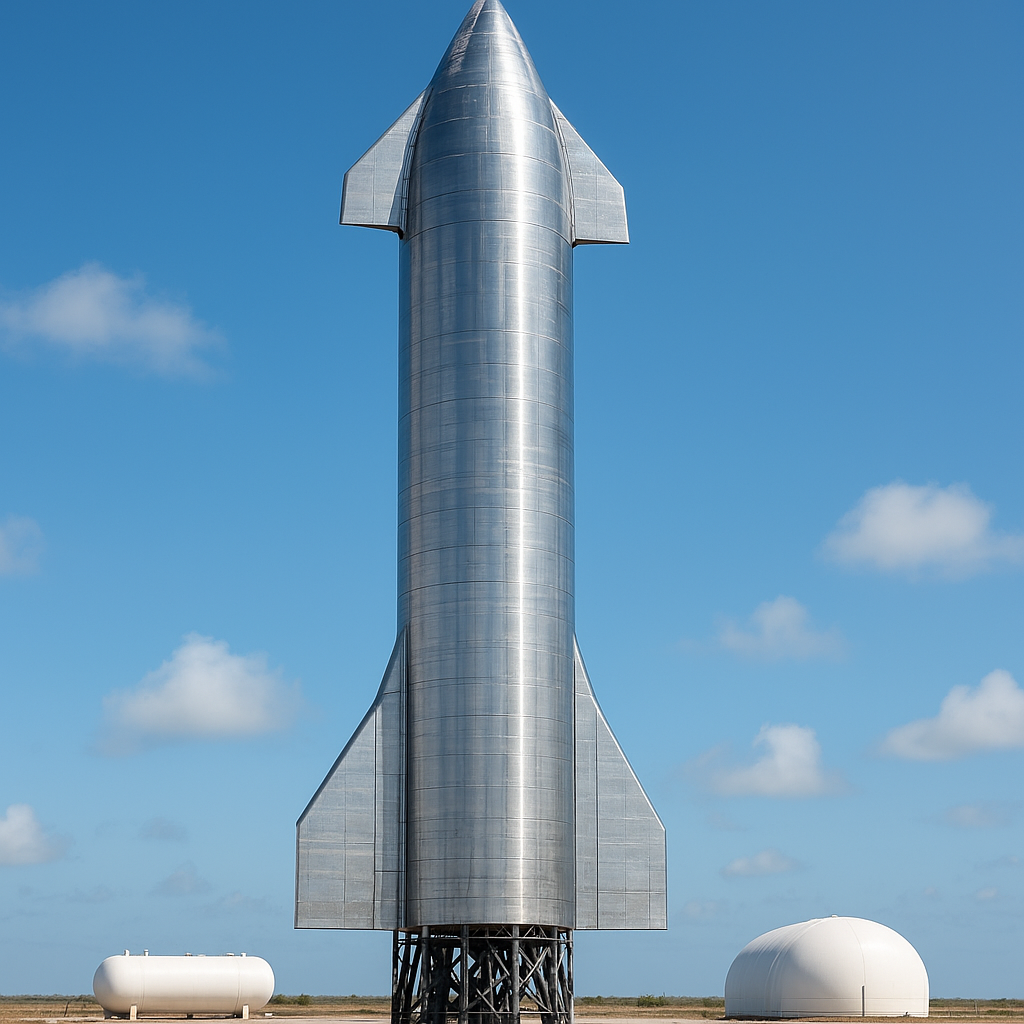
- Thick stainless-steel hull plating for improved thermal resilience during atmospheric entry.
- Advanced hot-stage separation allowing both stages to remain nearly fully fueled until just before cutoff.
- Grid fins and aerodynamic flaps that enable precise reentry trajectory control.
- A dedicated heat shield composed of hexagonal ceramic tiles to withstand reentry temperatures.
- Innovative tank insulation derived from industrial cryogenic practices.
Crucially, the entire system is built to be reusable. Super Heavy boosters are designed to return to the launch site for vertical landings, while the second stage may execute similar returns or dock with orbital refueling platforms. This reusability model promises to drive down launch costs by an order of magnitude compared to expendable rockets.
Transforming Interplanetary Travel
By delivering unprecedented payload capacity to orbital destinations, Starship is set to revolutionize how satellites, research experiments, and crewed missions are staged. It can carry multiple satellites in a single launch, deploy space telescopes, or transport supplies for lunar bases. Yet its most profound impact lies in its ability to enable interplanetary journeys at scale.
Pathway to Mars
The objective of reaching Mars has captured public fascination for decades. Starship aims to land dozens of tons of cargo on the Martian surface ahead of crewed expeditions, establishing the infrastructure for resource processing, habitat construction, and eventual human settlement. The system’s high payload margin means multiple trips could ferry heavy machinery, life support modules, and even propellant plants to sustain return voyages.
Wider Solar System Exploration
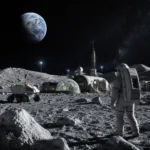
- Moon Gateways and permanent lunar bases supplying deeper missions.
- Asteroid rendezvous for in-situ resource utilization experiments.
- Logistics for scientific outposts on the moons of Jupiter or Saturn.
- Rapid cargo transfer for deep-space telescopes and communication relays.
Beyond Mars, the versatility of Starship opens the door to constructing space habitats, towing large telescopes to Lagrange points, or staging crewed expeditions to the outer planets. This capability for colonization infrastructure could redefine humanity’s place in the cosmos.
Challenges and Future Prospects
No pioneering endeavor is without its hurdles. Regulatory approvals, environmental assessments, and public safety concerns all require careful navigation. Launch sites must account for sonic booms and ecological impact, and dense launches of methane-fueled rockets raise air quality discussions. Moreover, the technical task of orbital refueling—transferring cryogenic propellant between two vehicles—has never been attempted at scale, representing an operational risk.
Nevertheless, the program’s relentless push toward demonstration flights and incremental achievements underscores a culture of bold innovation. Partnerships with international space agencies could accelerate lunar missions, while commercial collaborators aim to deploy satellite constellations from Starship’s ample payload bay. Meanwhile, research institutions are exploring scientific payloads that could leverage the vehicle’s unique mass-to-orbit ratio.
In parallel, emphasis on environmental sustainability has grown. Efforts to capture vented methane, recycle water from rocket operations, and develop greener propellant variants reflect broader commitments to responsible exploration. As the program scales, these practices could become industry standards, aligning commercial spaceflight with global conservation goals.
Overall, the Starship initiative represents a watershed moment in aerospace. By pushing technical boundaries and reshaping economic models for launch services, it may well set the stage for a new era of human expansion beyond Earth’s cradle.