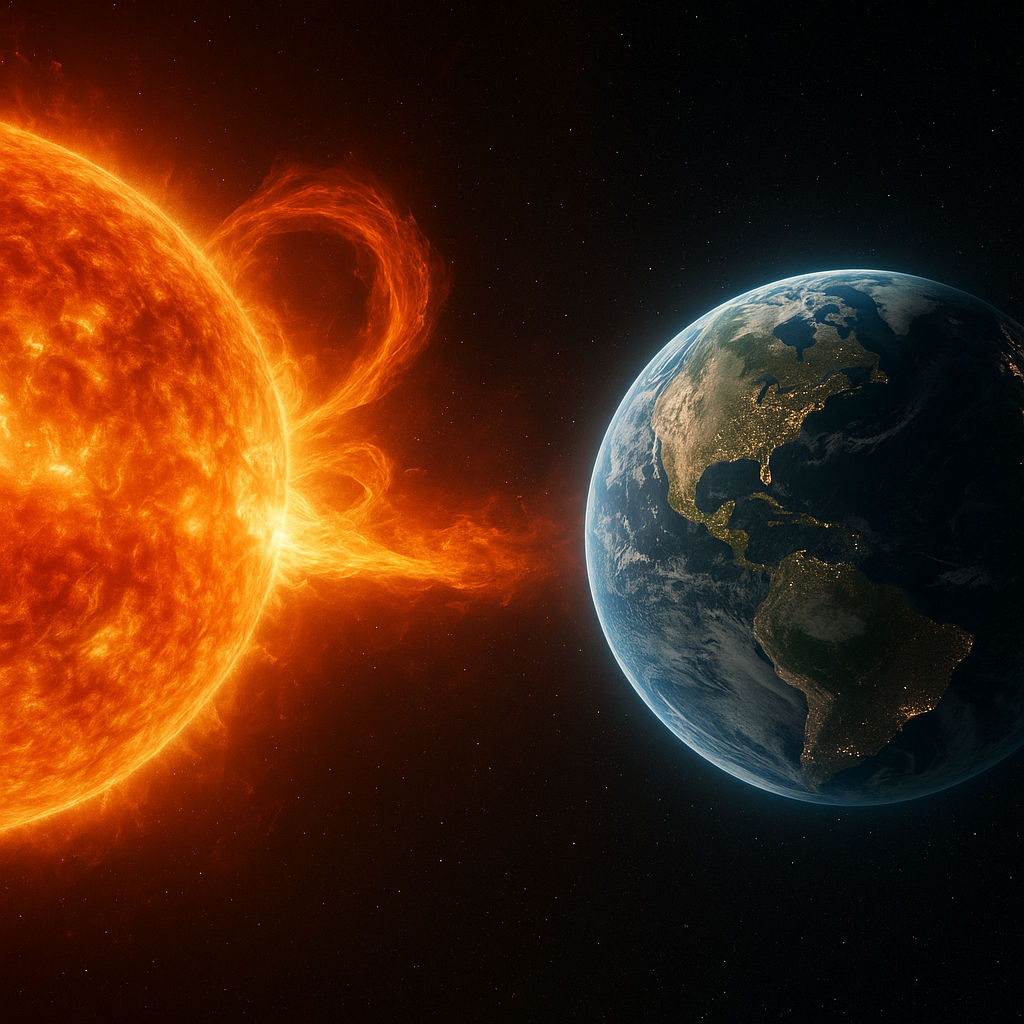
The Sun’s dynamic activity can unleash powerful bursts of energy known as solar storms, posing significant challenges for modern society. Originating from intense magnetic disturbances on the solar surface, these phenomena hurl vast clouds of charged particles and electromagnetic radiation across the solar system. When these eruptions interact with Earth’s magnetosphere, they can produce stunning auroras but also trigger dangerous side effects for technology and human life. Understanding the mechanics, impacts, and mitigation of solar storms is crucial for safeguarding our increasingly interconnected world.
Understanding the Nature of Solar Storms
Solar storms encompass several interrelated events, including solar flares, coronal mass ejections (CMEs), and high-speed solar wind streams. Solar flares are sudden bursts of X-rays and extreme ultraviolet light. CMEs propel billions of tons of ionized gas into space. These events often occur in tandem, intensifying the potential threat to planets in the solar system.
Mechanisms of Eruption
The Sun’s surface is a roiling sea of magnetic fields that twist and tangle under constant motion. When these magnetic lines snap and reconnect, they release tremendous energy. That energy accelerates charged particles—primarily electrons and protons—to near-relativistic speeds. The resulting plasma clouds can travel the 150 million kilometers to Earth in as little as 15 hours.
Interaction with Earth’s Shield
Earth’s magnetic field forms a protective bubble known as the magnetosphere. When the CME’s plasma strikes this shield, it compresses and distorts it, creating geomagnetic storms. Electrons spiral along magnetic lines toward the poles, producing auroral displays. However, powerful storms can induce electrical currents in the crust and man-made systems, leading to widespread disruptions.
Impacts on Earth’s Technological Infrastructure
Modern civilization relies heavily on a web of interconnected systems—many of which are vulnerable to solar activity. From satellite operations in orbit to electrical networks on the ground, the cascading effects of a severe solar storm can be profound.
- Satellites: High-energy particles can damage sensitive electronics and solar panels. Temporary malfunctions in communication and Earth-observation satellites compromise weather forecasting and navigation services.
- Power Grids: Induced currents flow through long conductors such as transmission lines. Overloads can trip transformers and cause blackouts across entire regions.
- Radio Communication: HF radio signals, vital for aviation and maritime industries, can be absorbed by the ionosphere, leading to sudden blackouts.
- Navigation: GPS accuracy deteriorates as ionospheric disturbances create signal delays, hampering both civilian and military operations.
Coronal mass ejections also spawn intense radiation that increases the risk of single-event upsets in electronics. These bit-flips can corrupt data or even disable spacecraft systems, necessitating robust error-correction protocols.
Risks to Astronauts and Aviation
Beyond ground technologies, human activities at high altitudes and in space face serious threats. Increased exposure to ionizing radiation can have acute and long-term health consequences.
Astronaut Health Hazards
Inside the International Space Station, shielding reduces exposure, but a direct hit from a powerful solar storm could overwhelm protective layers. High doses of radiation can damage DNA, elevate cancer risks, and impair central nervous and cardiovascular systems. Mission planners must constantly monitor solar activity to schedule spacewalks during lulls in eruptive events.
Impact on Aviation
Flights over polar routes rely on high-frequency communication that can be disrupted during severe storms. Radiation levels at cruising altitudes rise, exposing crew and passengers to greater doses. Airlines may need to reroute flights to lower latitudes or delay departures when solar storms are forecast to peak.
Mitigation Strategies and Future Research
To reduce the vulnerability of critical infrastructure and protect human health, a multifaceted approach is essential. This includes improved forecasting, engineering safeguards, and international cooperation.
Enhanced Space Weather Forecasting
Agencies such as NOAA and ESA operate satellites dedicated to monitoring the Sun’s activity. Instruments measure solar magnetic fields, coronal structures, and energetic particles. By refining models of CME propagation and ionospheric response, predictive lead times can increase from hours to days, giving operators time to secure sensitive systems.
Engineering and Operational Safeguards
- Hardened Electronics: Design circuits to tolerate single-event upsets and equip them with automatic recovery routines.
- Grid Resilience: Install geomagnetically induced current (GIC) blockers and upgrade transformer designs to withstand sudden current surges.
- Flight Protocols: Develop radiation dosimetry monitoring onboard aircraft and establish thresholds for rerouting or grounding flights.
International Collaboration
Solar storms respect no borders. Coordinated data sharing and joint research initiatives amplify detection capabilities. Under the guidance of organizations like the World Meteorological Organization, countries can develop standardized alert levels and response plans.
Space weather research continues to evolve, with upcoming missions targeting the Sun-Earth connection. By combining observational, experimental, and theoretical efforts, scientists aim to unravel the complexities of solar activity and bolster our defenses against its potentially devastating consequences.